Would removing all foreigners without proper papers solve the problem by eradicating the third labour market segment altogether? No, the existence of this third labour market segment has become a structural necessity of the South African economy.
Amandla
A fiery baton: to the youth, we have organising to do, majita!
In the inaugural episode of the Mabaphil’ABANTU podcast, Dinga Sikwebu, Sindisa Monakali, and Yolanda “Bunny” Sewela share their reflections on activism and community building. Mabaphil’ABANTU serves as a movement space that fosters connections among activists and abantu, drawing insights from their personal journeys toward justice.
Ukrainian fascist court sentences Bogdan Syrotiuk, socialist opponent of the war, to 15 years in prison
The fight to free Bogdan Syrotiuk is a fight against imperialist war, dictatorship, and fascism.
Gen-Z: when the government goes right, we should go left
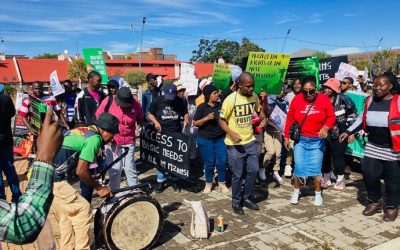
If the government moves towards policies that prioritise capital over people, Gen-Z must respond by building movements that prioritise people over profit.
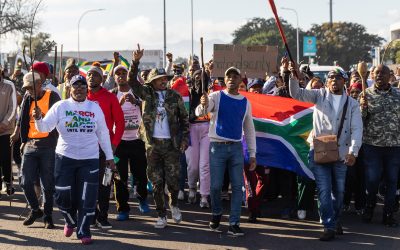
From xenophobia to authoritarian politics
South Africa’s xenophobic infrastructure, which is rooted in the country’s history of exclusion, is driven by anti-Black racism.
Huhudi: students, civics and a struggle against forced removals
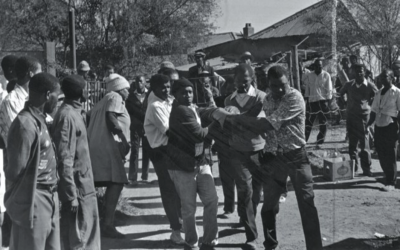
Huhudi played a vital role in apartheid’s downfall. Through organisations such as HUYO and HUCA, the residents of Huhudi made meaningful contributions to the broader struggle that ultimately weakened the apartheid system throughout South Africa.
Anti-fascist internationalism from below: lessons from Porto Alegre
Madoda Cuphe, reflects on an anti-fascist conference held in Porto Alegre, Brazil earlier this year. The gathering convened grassroots movements, trade unions, and socialist organisations to discuss the global rise of the far-right and neo-fascist movements.
Led by learners: grief and revolt on Black campuses
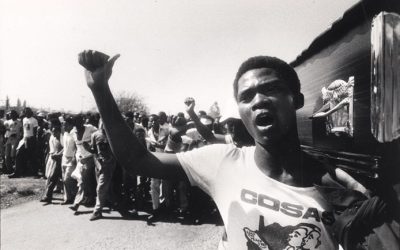
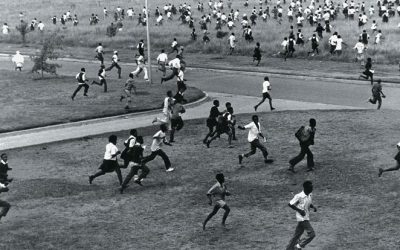
In the 1980s, mass mobilisation and student movements significantly impacted activism on university campuses, linking them with township schools. Despite being located in bantustans, the three rural Black universities maintained strong ties to national activism networks. This connection was evident during the Soweto uprising, as university students protested in solidarity with Soweto school students, highlighting their shared struggles.
South Africa’s National Water Action Plan prioritises solvency over justice
South Africa does not need a more bankable water sector. It needs a public one, capable of delivering water as a right rather than a return.