From 26–29 March 2026, I had the privilege of attending an important anti-fascist conference in Porto Alegre, Brazil. The gathering brought together grassroots movements, trade unions, Left political parties, socialist organisations, youth activists, women’s organisations and international solidarity networks from across the world. The conference was organised by MES-PSOL together with organisations linked to the United Secretariat of the Fourth International, the Workers’ Party of Porto Alegre, the local Communist Party of Brazil, the Landless Workers’ Movement (MST), local trade unions and many social movement organisations. Different organisations from other countries also participated as guests.
The conference demonstrated something important and encouraging for all progressive forces globally: despite political differences and diverse ideological traditions, the Left can unite in defence of democracy, social justice and working-class struggles against the growing threat of fascism and the far-right.
The first day of the conference opened with a massive march through the streets of Porto Alegre, attended by more than 7,000 people. It was not a march of elites or professional politicians. It was a movement of ordinary workers, indigenous communities, students, unemployed people, women and youth. The energy and determination on the streets showed that resistance to fascism is rooted among the people themselves.
A crisis of global capitalism
The rise of far-right political forces across the world has become one of the defining political developments of recent years. In many countries, these forces have either already come to power or are increasingly close to doing so. This dangerous trend is unfolding alongside the deep crisis of traditional political parties and political regimes. Millions of working people have lost confidence in institutions that have failed to address unemployment, inequality, corruption, poverty and social collapse.
The emergence of neo-fascist movements is not accidental. It is a byproduct of the broader crisis of the global capitalist system. Decades of austerity policies, attacks on workers, privatisation and growing inequality have created conditions of despair and anger among ordinary people. Established political forces responded to these crises with corruption, repression and policies that protected the wealthy while the poor continued to suffer. As a result, many people became disillusioned with traditional politics and began searching for alternatives.
The far-right has attempted to exploit this anger by blaming migrants, minorities, women, progressive movements and democratic institutions for the failures of capitalism itself. But the conference in Porto Alegre reminded us that there is another alternative, a politics of solidarity, internationalism and struggle from below. Importantly, the conference also highlighted that fighting fascism cannot only be reduced to electoral politics.
The real strength against authoritarianism lies in organised communities, militant workers’ movements, student struggles, women’s resistance, indigenous mobilisation and grassroots organising. Fascism grows when working-class organisations are weak and fragmented. It can be defeated when social movements unite around concrete struggles for dignity, jobs, land, housing, democracy and economic justice.
Lessons for Africa
For those of us coming from Africa, there are important lessons to draw from this experience. We too face rising inequality, unemployment, xenophobia, deepening poverty and increasing frustrations among the masses. We also witness attempts by reactionary forces to divide the working class and redirect social anger away from the failures of capitalism. Building unity amongst grassroots organisations, trade unions, left formations and community struggles is therefore not a luxury; it is a necessity.
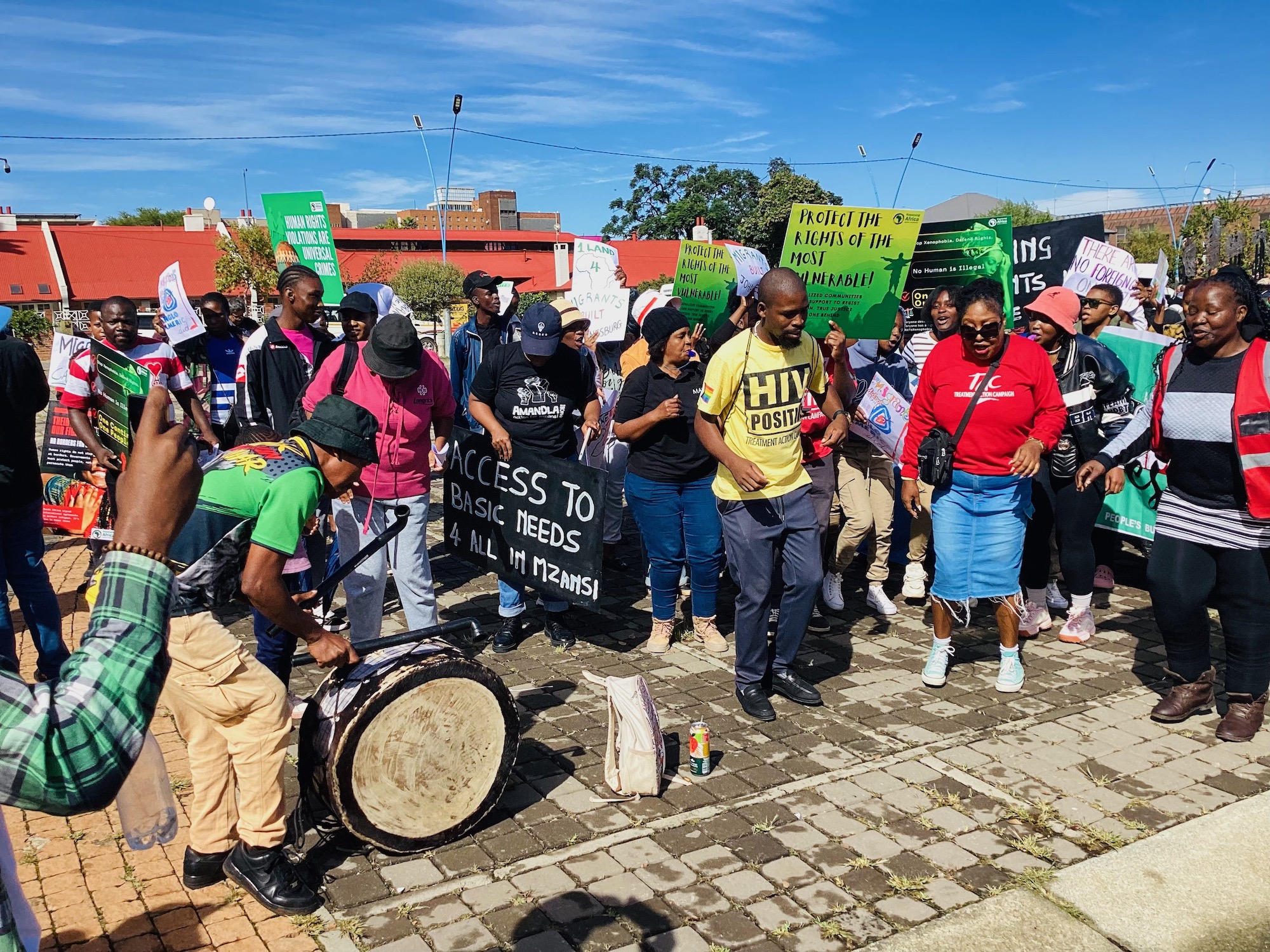
The conference resolved that the struggles against fascism and right-wing policies cannot be divorced from the movement to abolish capitalism and imperialism around the world. The conference therefore took a stance to support these movements in every country. There will be a coordinated international resistance against capitalism and imperialism, a system that breeds fascism. As we face a similar situation with the rise of Xenophobia in South Africa, the call is to unite all Left-leaning forces to resist.
Madoda Cuphe is an activist who works for the movement support unit at AIDC and is a member of ZASO.
*Featured Image by Kimberly Mutandiro/GroundUp