For this special feature to commemorate 50 years since June 16, Amandla! ran a social media campaign. We asked young people to contribute writing and photos on the theme: #TheChangeIWantToSee. Thanks to all those who participated. We publish here a selection of the contributions we received.
South Africa
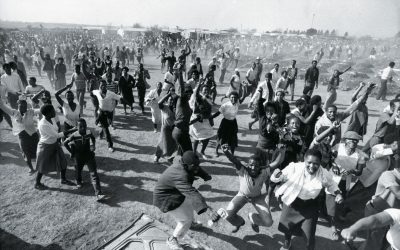
1976…2026: The continuing struggle for education
Fifty years after the 1976 Soweto Uprising against Bantu Education and Afrikaans as a medium of instruction, the struggle for a dignified education in South Africa continues amid severe crises like overcrowding, teacher cuts, and the collapse of NSFAS, requiring a renewed political consciousness to achieve true liberation.
The state of the nation’s economy
Economic liberation is essential to begin addressing South Africa’s social crisis.
Mass unemployment by design: rethinking South Africa’s manufactured economic consensus
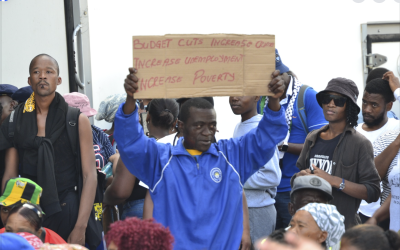
South Africa’s ongoing and worsening mass unemployment stems from a deliberate, market-friendly, and pro-business economic consensus that has proven ineffective over the past 30 years.
The story of a victim of Operation Dudula
Amandla! spoke to Tendai, a victim of Operation Dudula, about her experience at the Spartan clinic in Ekurhuleni.
The right threatens: we must fight back
Imperialism has transformed into an oligarchic project, with billionaires and monopolistic tech firms controlling the American state under Trump, imposing austerity and privatisation on regions abroad.
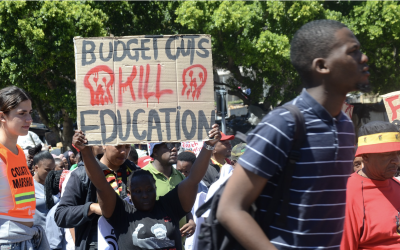
Budgets shape societies: the risk to our schools
The government’s political choices are weakening public schools and creating space for private actors to step in. This has concerning implications for equity and democratic control.
How the retirement contribution deduction perpetuates inequality in South Africa
South Africa’s inequality has not changed in ten years, with the wealthiest 10% holding 86% of the country’s total wealth. Yet there is still a tax policy that contributes to maintaining inequality. Treasury has the potential to address this in the upcoming 2026 budget announcement. Will they do it?
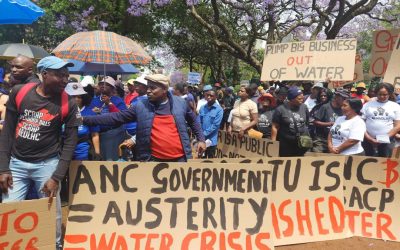
Water restrictions risk punishing the poor
In the world’s most unequal city, in one of the world’s most unequal countries, a water policy that ignores inequality is not neutral. It is harmful.