
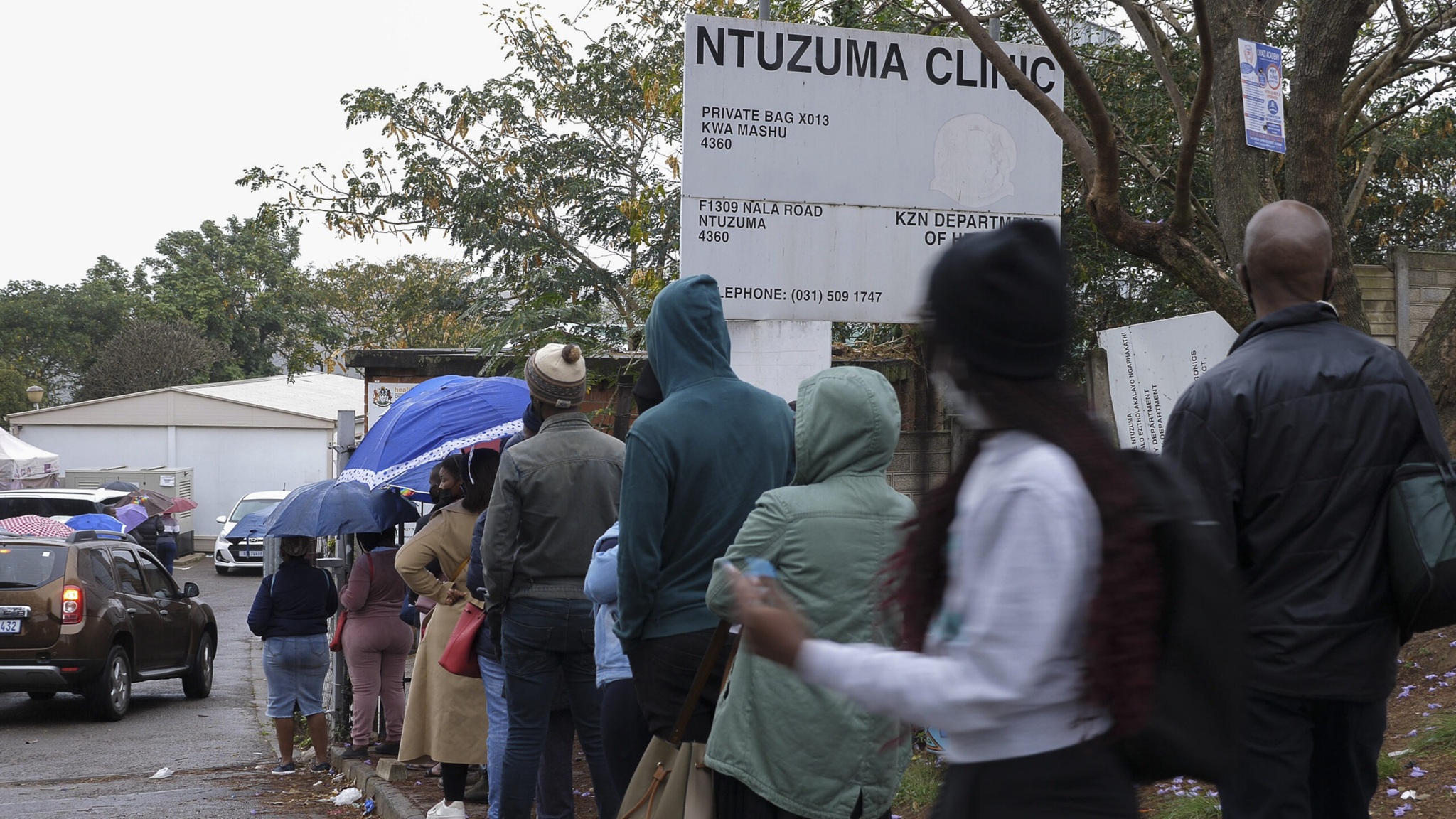
A disturbing new chapter in South Africa’s ongoing struggle with xenophobia is unfolding. Members of Operation Dudula have physically blockaded healthcare facilities across multiple provinces, preventing non-South Africans from accessing essential medical services. These vigilante groups are stationed at clinic entrances, mainly in Gauteng and KwaZulu-Natal. They demand identity documents and turn away those deemed “foreign-looking”, regardless of their documentation status.
The consequences have been dire. Organisations like Médecins Sans Frontières (MSF) have documented cases of six-month-old babies with severe respiratory infections denied care. Pregnant women with high-risk conditions have been turned away from antenatal clinics, and chronic patients have been unable to access life-saving medication for HIV, diabetes, and hypertension.
What makes these blockades particularly sinister is the collusion between vigilantes and state authorities. Reports indicate that, at two clinics, Operation Dudula’s activities were “actively facilitated by either clinic security or staff themselves,” according to MSF’s regional advocacy co-ordinator, Clair Waterhouse, with nurses expressing gratitude for having fewer patients to treat. In some facilities, Dudula members reportedly “’check’ in with staff every morning as if they were part of the clinic’s routine”. This institutional complicity has created a healthcare apartheid in the functioning of public health institutions.
The victims of this medical xenophobia represent South Africa’s most vulnerable populations. Cases include a 33-year-old hypertensive woman, 16 weeks into a high-risk pregnancy, who was turned away from a Gauteng hospital by Dudula members while nurses laughed and declared, “They said we don’t pay tax, and they are tired of us.” A 44-year-old domestic worker living with HIV fears approaching clinics for refills. These are not isolated cases. Health organisations have assisted numerous people denied healthcare in just three weeks, with growing lists of patients urgently needing support to access treatment.
Xenophobia in post-apartheid South Africa
Operation Dudula’s healthcare blockades did not emerge in a vacuum. Since 1994, there have been repeated outbreaks of anti-foreigner violence, resulting in significant casualties and displacements. The May 2008 xenophobic uprising left 62 people dead, over 600 injured, and more than 100,000 displaced, in a two-week period of violence that saw door-to-door searches in townships and inner cities.
What distinguishes the current wave of xenophobia is its systematic targeting of healthcare access and the overt collaboration between vigilante groups and state institutions. The underlying narratives are familiar. Dudula’s representatives claim they are responding to “community cries” that “services are slower” because of “an influx of undocumented people” who threaten citizens’ access to “free health services [that are] supposed to put South Africans first.” Similarly, during earlier attacks, foreigners were scapegoated for scarcity and inadequate public services.
The historical role of state institutions in enabling xenophobia cannot be overlooked. Past studies found that many police officers believed, without evidence, that most undocumented immigrants were involved in crime. Refugees have consistently reported being mistreated by police, who steal from them and make unconfirmed allegations about criminal activity. This institutional bias creates an environment where vigilante actions face little opposition; police consistently fail to intervene when Operation Dudula members physically block entrances to hospitals, schools, and businesses.
Structural roots: beyond migrant scapegoating
Rather than scapegoating migrants for systemic failures, South Africa needs a healthcare system that addresses the actual structural barriers to access: underfunding, staff shortages, bureaucratic inefficiency, and geographical maldistribution of resources.
To frame Operation Dudula’s activities merely as hatred toward foreigners is to miss the structural nature of this crisis. South Africa suffers from catastrophic unemployment rates, extreme inequality, and a public healthcare system strained by budget cuts, staffing shortages, and managerial deficiencies. Rather than acknowledging these structural problems, political actors and community groups redirect frustration toward vulnerable non-citizens.
Studies have found correlations between acts of xenophobic violence and economic pressures. Qualitative research has identified extremely high unemployment, housing scarcity and inequality, and extreme retail business competition as core motivators of xenophobic violence. And the narrative of competition for limited resources ignores the actual economic contributions of migrants and the structural nature of resource deprivation.
The mismanagement of public services plays a crucial role in fueling these tensions. Problems in public healthcare are the result of budget cuts and staff shortages rather than migrant presence. The political economy of xenophobia must be acknowledged. Operation Dudula’s rhetoric aligns conveniently with the government’s efforts to restrict immigrant rights through legislative reforms. The Department of Health has proposed revisions to immigration laws, including amendments to the Immigration Act and Citizenship laws. By framing migrants as the problem, the state diverts attention from its own failures to address the structural determinants of health system weakness and economic exclusion.
State complicity and exclusionary frameworks
Rather than unequivocally condemning Operation Dudula’s vigilantism, the government’s response has been characterised by ambiguity and complicity. Some government officials have engaged with Operation Dudula leaders, while confirming that foreign nationals are only entitled to emergency medical services under the current interpretation of the law. This reinforces the view that foreign nationals are the cause of overcrowding in public hospitals.
The legislative framework governing migrant access to healthcare remains deliberately ambiguous. The Constitution states that “everyone has the right to have access to health care services.” But, according to the Chairperson of the Portfolio Committee on Health, “comprehensive healthcare is for South Africans”; only emergency services should be provided to foreign nationals.
The proposed National Health Insurance (NHI) Act institutionalises this exclusion by limiting comprehensive healthcare to South African citizens and permanent residents. This effectively creates a two-tiered system that denies preventative and chronic care to migrants. This approach contradicts the World Health Organisation’s definition of universal health coverage: “all people have access to the full range of quality health services they need…without financial hardship”. Rather than moving toward this vision, South Africa is retreating into healthcare nationalism that threatens both human rights and public health.
The public health implications of excluding migrants from care are severe. Medical xenophobia leads to delayed treatment, worsening health outcomes, and increased transmission of infectious diseases. This affects citizens and non-citizens alike. When pregnant women are denied antenatal care, children face preventable diseases, and HIV patients cannot access antiretroviral therapy, the entire community’s health is compromised. Exclusionary policies ultimately burden the healthcare system more than inclusive approaches would, as preventable conditions develop into acute crises requiring emergency intervention.
Alternatives to exclusionary healthcare
A transformative approach to healthcare must begin with recognising that health is a human right that cannot depend on nationality or documentation status. Rather than scapegoating migrants for systemic failures, South Africa needs a healthcare system that addresses the actual structural barriers to access: underfunding, staff shortages, bureaucratic inefficiency, and geographical maldistribution of resources.
Community-based organisations are already modelling solidarity-based approaches to healthcare exclusion. Organisations renowned for their successful fight for HIV treatment access have redirected energy towards assisting those excluded by Dudula’s blockades. Their approach involves connecting patients with alternative facilities while ensuring their medical information remains recorded in the system. This demonstrates that practical solutions exist when political will is present.
Policy reforms must include clear guidelines prohibiting discrimination in healthcare settings, cultural sensitivity training for healthcare providers, community engagement programmes, and monitoring mechanisms to address systemic inequalities. Legislative ambiguity regarding migrant healthcare access must be resolved through a rights-based framework that aligns with South Africa’s constitutional values and international human rights obligations.
Ultimately, addressing medical xenophobia requires confronting socioeconomic inequality at its roots. This means moving beyond punitive measures against perpetrators and tolerance promotion to address the material conditions that fuel resentment and competition. A genuinely universal healthcare system would not only provide healthcare to all. It would also create jobs, reduce health disparities, and foster social solidarity across nationality lines.
Beyond liberal moralisms
The struggle against Operation Dudula’s healthcare blockades cannot be won through moralistic appeals to tolerance alone. Condemnations of xenophobia that ignore its structural roots are destined to fail. What is required is a materialist analysis that connects healthcare exclusion to broader patterns of economic injustice and state failure. This analysis must inform a collective action framework that unites citizens and migrants in demanding improved public services for all.
South Africa stands at a crossroads: it can retreat further into healthcare nationalism that violates its constitutional values and compromises public health, or it can embrace a vision of universal healthcare truly deserving of the name. The choice is not between citizens’ rights and migrants’ rights; this is a false dichotomy that serves elite interests. The real choice is between a divided society, where scarce resources are weaponised against vulnerable groups, and a united society where all work together for health justice.
Clinics must be made safe for all who need them through proactive measures. This safety will not come from more exclusionary policies or vigilante violence, but from building a healthcare system that serves everyone regardless of nationality. The legacy of apartheid should have taught South Africa that divided healthcare systems inevitably fail everyone. Only through solidarity and collective action can the promise of health for all be realised.
Mike Ndlovu is a media organiser for Kopanang Africa Against Xenophobia (KAAX).