

Much has been written about the psychology of apartheid. However, racism remains the most important topic in South Africa as it persists as a fundamental form of violence. So, where is the comprehensive psychological theory of racism and violence? One expected South African psychology departments to be at the forefront of such theoretical developments. If anything, identity politics at present-day universities led to the popularity of, for instance, Frantz Fanon. Fanon had written brilliantly about the violence of colonialism and the psychoanalysis of racism. But we live in a different era. Colonialism ended in South Africa in 1910 already, and we are currently dealing with racial capitalism of the neoliberal kind, which is managed by the “black” or “African” political elite. This ought to be the focus. On a political level, the Third Worldism of Fanon has, in any case, been irrelevant for a long time already. There is a need for new ideas.
In the mid-1990s at certain South African psychology departments the debate shifted to the relevance of Freudian theory. After all, the political and personal struggles showed that consciousness was far more important than unconsciousness. The hazardous vanity of Freudianism with its focus on the unconscious remains a significant contributor to alienation. That school of psychology has always been inappropriate due to being based on ‘false biology’ (Stephen Jay Gould) and ‘sometimes incomprehensible conjectures’ (Lev Vygotsky). Not to mention the tremendous advances in the understanding of brain functioning that clearly contradict Freudianism. But maybe it is necessary to discuss the link between that psychological theory and white supremacist ideology to understand why Freudian dogma was promoted.
Freudian Theory
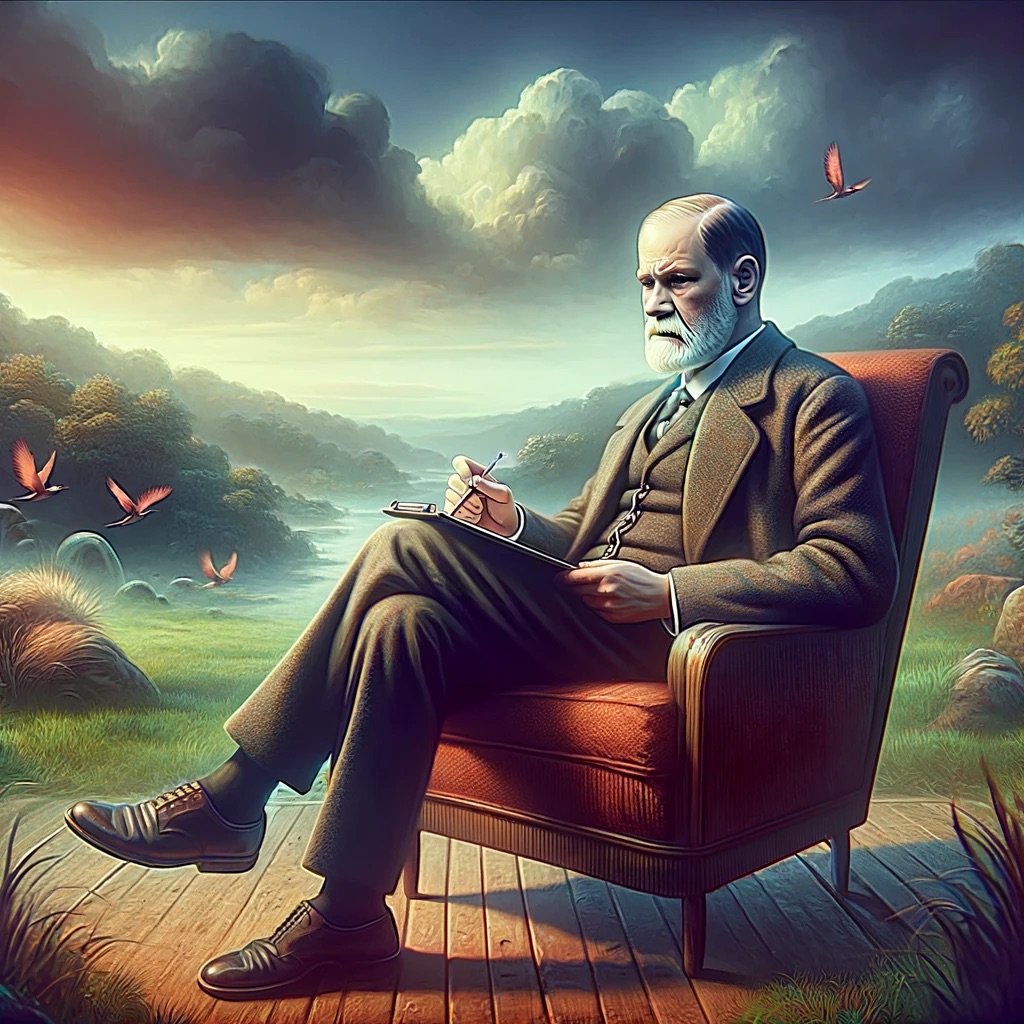
“Dreams are the royal road to the unconscious.” – Sigmund Freud.
For Sigmund Freud, human nature is driven by unconscious or instinctual drives, namely, sex (narcissism) and aggression (competition). That is where the immense emphasis on the unconsciousness, especially dreams, emanated from. It is consistent with the biological determinism of Social Darwinism. Unfortunately, Freud’s reactionary ideas overshadowed the advanced contributions of others such as Fritz Perls, John Bowlby, Viktor Frankl and Erich Fromm.
In a withering criticism of Freud’s Social Darwinism, biologist Stephen Jay Gould commented that: “Freud’s theory ranks as a wild speculation, based upon false biology and rooted in no direct data at all about phylogenetic history. Yet the manuscript has been published and analysed with painstaking care more than half a century later. Hundreds of unknown visionaries develop equally far-fetched but interesting and coherent speculations every day – but we ignore them or, at best, laugh at such crazy ideas.” (Freud’s evolutionary fantasy. In: The richness of life. pg. 479). Gould refers to Lamarckian evolutionary theory (inheritance of acquired traits) which Freud used to explain neuroticism, and the Recapitulation theory (individual organism reflects the evolutionary history of the species) that has been the basis of so much racism. But, of course, the impact of historical events is not passed on through genetics; it is not determined by biology.
Gould writes from a Darwinist (gradual and continuous change due to local conditions) perspective although he extended that scientific theory with his own perspective about change happening due to a punctuated equilibrium. It is notable that Gould also presented a devastating critique of intelligence testing and racism in his award-winning book ‘’The Mismeasure of Man,’’ which probably should be compulsory reading in South African psychology departments. There are, of course, many other progressive biologists such as Richard Lewontin (Not in our genes).
Biological Theory
Another misunderstanding of contemporary psychology in South Africa was to conflate ‘’black’’ or a narrow ‘’African’’ nationalism with relevance in mental health. It is simply another version of a discredited biological determinism. It is undoubtedly true that racism remains a massive problem, but it is unclear how ‘’black’’ nationalism advances the understanding of mental health issues. On the contrary, it seemed to have been an obstacle to progress.
It is hardly unrealistic to have expected the pioneering work of Bessel van der Kolk (The Body Keeps the Score) or Gabor Maté (In the Realm of Hungry Ghosts) on trauma, or Stephen Jay Gould on the biological determinism that underlies racism to feature prominently in post-apartheid South African universities. Van der Kolk emphasised the bodily aspect of trauma, while Maté pointed out that the trauma of dispossession caused addictions. Gould offered a thorough refutation of biological determinism, which applies to both the ‘white’ and ‘black’ versions. Not to mention the works of Patrick Holford (Optimum Nutrition for the Mind) or Abram Hoffer (Niacin: The Real Story) on nutrition to counter such biological determinism. It is the Social Darwinist movement that not only inspired Freudianism but also the ongoing over-emphasis on genetic make-up, chemical imbalances, and neurodiversity. It is proto-racism or racism in disguised forms. In addition, the cutting-edge research of Joanna Moncrieff (The serotonin theory of depression), Robert Whitaker (Anatomy of an epidemic) and Peter Breggin (Toxic psychiatry) ought to be discussed in psychology programs since the global mental health debate shifted in the mid-2020s to the biomedical model. Whitaker highlighted the widespread disability caused by psychiatric medicine. A crucial implication of the Moncrieff study on the serotonin hypothesis is the need to move away from the discredited biomedical model – even of course in neuropsychology. If anything, it is high time to acknowledge the impact of culture on neurological development, as expressed in the revolutionary investigations of Alexander Luria which showed that language creates the neurological connections.
It is perhaps unsurprising that no anti-psychiatry movement exists in a country such as South Africa with its long history of extreme racism. If we contrast this with Brazil, for example, where psychiatrist Paulo Amarante has been in the forefront of a de-institutionalisation movement, it is noteworthy that a similar undertaking is absent in the post-apartheid country.
Lifestyle Theory
In the mental health field, it is imperative to develop a lifestyle model of mental health.
Sleep: Sleep deprivation is a major issue in the mental health field. The adult brain needs 8 hours of sleep in a 24-hour cycle to complete sleep stage 5 that is so necessary for waste removal in the brain. Laura Lewis demonstrated that cerebrospinal fluid washes out the brain while blood flows out completely. Therefore, the prefrontal cortex – where advanced thinking and secondary emotions occur – is switched off, while the temporal lobe (limbic system, auditory processing) and the occipital lobe (visual processing) seem to be responsive. Maybe this is why dreams (rapid eye movement) are sometimes linked to unresolved emotions, which is usually anxiety as the most physical basic emotion. Overall, however, dreams are hardly of such great significance as the Freudians would like to suggest. Future research would have to comprehend how the cerebrospinal fluid impacts sleep stage 5, but also if for instance that fluid or micro-naps might be involved in dissociative experiences or psychogenic seizures. In general, much more research is required on sleep stages.
Nutrition: The trailblazing work of Abram Hoffer revealed the importance of Vitamin B3 (niacin/nicotinamide) to the human brain, as expressed in the lack of it in schizophrenia. Very large amounts of nicotinamide help for schizophrenia, especially the negative symptoms, while it could be argued that the positive symptoms are produced by sleep deprivation. There is no genetic or biological cause of schizophrenia, which is called Integration Disorder in Japan – an example that the rest of the world should consider. The lack of integration of the brain is simply triggered by sleep and nutritional deprivations. Another example is that of the abuse of cannabis smoking among young people – specifically those below 25 years whose brains are rapidly developing – puts them at great risk of Integration Disorder as cannabis smoking results in the leaching of vitamin B from the brain.
Exercise: Aerobic-type exercise, especially running, can generate new brain cells. The research of Wendy Suzuki on the benefits of exercise is of relevance in this regard. Yoga assists traumatised people to reconnect with their bodies.
Natural birth: Vaginal passage is extremely critical to the microbiome of the newborn as it impacts on brain health. With regards to special children, we now know that 40% of autism cases are due to caesarean sections, but also that autism symptoms can be reversed with nutrition and other interventions. Maybe mental health workers could be in the forefront of a public campaign against unnecessary C-sections.
Violence and Trauma Theory
In the final analysis, though, we also urgently need a comprehensive psychological theory of violence and trauma. Different forms of violence disrupt and disorganise the human body and lead to complex expressions of trauma. Structural violence (classism) and super-structural or cultural violence (patriarchy, racism) give rise to direct manifestations of violence such as the rape of women, the abuse of children, the traumatic brain injuries due to having been assaulted and the violence towards self in the form of suicide.
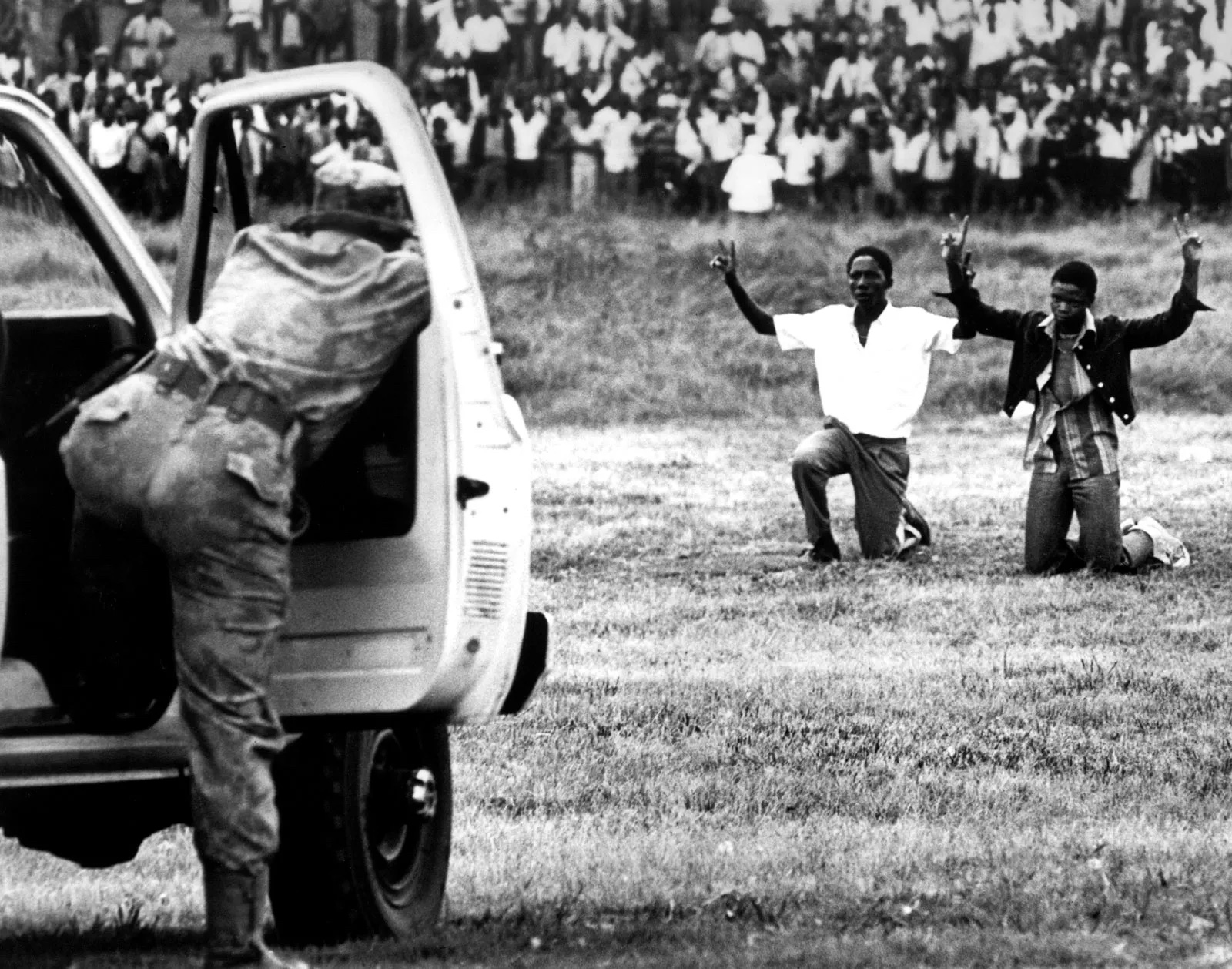
Soweto youth flashing the peace sign at an Apartheid police officer during the 1976 Soweto Uprising. Photo: Unknown
Classism disrupts and disorganises the bodily autonomy of working people. Unemployment, as an outcome of classism, for example, is the chief factor in suicide among young adult males. Patriarchy disrupts and disorganises the bodily autonomy of women, children, and LGBTQ+ people. This model of male dominance is emotionally toxic and encourages men to suppress their emotions and women to repress their bodies. The blunting of emotions (title of the doctoral dissertation of Hendrik Verwoerd) is a key aspect of the oppression of self. Patriarchy also justifies the use of violence against children. The cycle of direct violence starts with the corporal punishment of children, and that is why mental health workers must do effective parenting workshops. The writings of Steve Biddulph (Raising boys; Raising girls) could be a guide.
Racism disrupts and disorganises the bodily autonomy of ‘’black’’ and ‘’brown’’ people. The emergence of the idea of a ‘’white’’ race (after Bacon’s Rebellion) was to divide working people, to create the myth of ‘’white’’ people, at the expense of ‘’black’’ and ‘’brown’’ people. The trauma of racism and dispossession lead to high levels of addictive behavior – alcoholism, drug addiction, sex obsession, etc. There are consequently many ‘’hungry ghosts’’ (emotionally disconnected) in ‘’black’’ and ‘’brown’’ communities. Their bodies keep the score of the trauma.
Trauma disrupts and disorganises the sense of self, the body gestalt. This experience of disempowerment in the here and now is a major mental health issue.
The body becomes a source of discomfort, and this leads to the disconnection from self and from others. The body undoubtedly keeps the score of anxiety, viz, the butterflies in the abdominal area, the chest discomfort, the heart palpitations, the throat discomfort, the sweaty palms, the dizziness, etc. This is at the root of the sense of disempowerment; feeling disembodied; not grounded in one’s body; the loss of bodily autonomy.
21st Century Gestalt Theory
Gestalt therapy is not as widely known as psychoanalysis and cognitive behavioural therapy. This was due to the lack of a firm theoretical foundation and the confrontational style associated with this approach to psychotherapy. However, the breakthroughs in comprehending the role of nutrition, sleep and exercise in mental health, as well as on the specific topics of trauma and addictions, changed the situation. Moreover, the advances in existentialist philosophy also provide gestalt therapy with a solid theoretical base.
Gestalt therapy was founded by German psychiatrist Fritz Perls, who experienced persecution and trauma in the context of the fascism of Nazism and apartheid. Perls, who lived in Johannesburg from 1934 to 1946, emphasized a holistic perspective to the human body in that the body and the mind, or, for that matter, that sensations, cognitions and emotions cannot be separated. So ‘gestalt’ refers to the whole, a holistic therapeutic paradigm that refuses to be limited by a one-dimensional focus on the unconscious or cognitions. The unconscious simply cannot be grasped without the consciousness, or cognitions cannot be divided from a complex phenomenon such as ‘inner speech’ or accompanying sensations or emotions. The point of departure of mental health ought to be the entire human body.
Such a bodily framework must move contemporary debates in mental health completely beyond the biomedical school of thought to a dialogue about what a lifestyle model means for maintaining a healthy body. The ethical imperative to ‘do no harm’ to the human body asserts that individuals cannot be compelled to be admitted to a psychiatric hospital, to take allopathic medicine, or to be disrespected in psychotherapy. It is, therefore, crucial to acknowledge people’s grounding in the human body and conceptualize mental health in that context. This is in line with existentialism – on which gestalt therapy was originally constructed – in the sense that being in the world is, in the first instance, about being in our bodies, in the here and now.
The provocative manner of Perls – and, therefore, many of his therapeutic techniques – is undoubtedly outdated in contemporary psychotherapy. However, the gestalt technique of the location of emotions in the body, or the identifying of emotions through bodily sensations, as an illustration, remains relevant. In the final analysis, gestalt therapy allows for the exploration of body trauma, including the dual trauma of racism and patriarchy, which remains a huge burden in the mental health sphere.
French philosopher André Gorz, for example, is an advanced contemporary existentialist and offers a theoretical basis for gestalt therapy at present. His radical humanistic-existentialist approach theorised about the striving for individual autonomy and the attempts to discover and create oneself. The challenge is for individuals to overcome the gap between what they are for themselves and what they are in their interactions with others since autonomy sets the boundaries of social relationships. Nonetheless, ultimately, all individualities ought to be developed.
For individuals to overcome alienation, they need to encounter themselves beyond the workplace, should end the glorification of work and enhance their social integration outside it. Furthermore, Gorz believed that all people must reclaim the right of sensitivity, beginning with the most fundamental certainties about the human body and grasping what it means to care about others. Individuals should be able to fully own their relationship with their bodies and to fulfil their existential needs.
Cultural-Historical Theory
In contrast to the ‘depth’ psychology of Freud, Vygotsky referred to his approach as ‘height’ psychology as his focus was on higher psychological processes. The Soviet psychologist was exceedingly critical of dualism and the resulting failure to recognise inter-functional interactions. For Vygotsky, the separation of unconsciousness from consciousness, cognitions from emotions, biology from culture, and so forth was at the root of the crisis in psychology. Besides Freud’s understanding of the unconscious being unchangeable, within ‘depth’ psychology people are seen as victims of the past and their instincts. They are not regarded as conscious beings with agency. On the other hand, cognitive psychologist Jean Piaget underestimated the role of language in human development, while cognitive psychology, in general, concentrates on reason and logic but remains ungrounded in emotions, willpower or social relationships. It is, unfortunately, a one-dimensional perspective on human psychology.
One of the most exciting events in contemporary psychology is the revelation over the past decade of Vygotsky’s writings in the last few years of his life (1932-1934) during which his interest shifted from cognitive processes to consciousness. Throughout this period, there was a surprisingly high level of cooperation between the Vygotsky Circle and Gestalt psychologists such as Kurt Lewin who, for instance, highlighted the impact of emotions and willpower on actions. This collaboration was regrettably interrupted by Vygotsky’s untimely passing and then ended by Stalinism around 1936. In 1930, Vygotsky maintained that “different social systems find their expression both in the type of personality and in the structure of human psychology in that historical period”. In other words, the psychology of humans is shaped by social relationships at a specific historical time. And the goal of a unified or integrated psychology ought to be ‘a free and full development of full human potential’.
Vygotsky’s shift in 1932 to the study of consciousness was especially about the sense-making aspect. In other words, in trying to comprehend consciousness, the question becomes: How do human beings make sense of themselves and the world? Through such sense-making, people organise and adapt their consciousness and create the unity of speech, intellect, emotions, willpower, imagination, sensations, and so forth. Humans actively engage with being in the world.
Vygotsky was particularly interested in how ‘’dramatic experiences’’ (‘’perezhivanie’’ in Russian) influence consciousness. He emphasised the essential role of language in people integrating and reorganising inter-functional connections, and the key part it plays in humans constructing and transforming themselves in the struggle for autonomy. Language is thus indispensable to the progress of consciousness.
Conclusion
In the end, it is important to affirm that racism and patriarchy are not transmitted through genes or the unconscious but through social relationships. It is essential, however, to create an everyday language against racism and patriarchy without falling into the trap of biological determinism. And we must ask: how do people make sense of racism and patriarchy, and how did the dramatic experiences of these forms of violence shape them? How do anti-racism and anti-sexism become common sense? And how do we enhance the bodily autonomy and full development of all individualities?
Let us debate a psychology relevant to our times.
Shaun Whittaker is a mental health worker and taught at the universities of the Western Cape and Namibia.