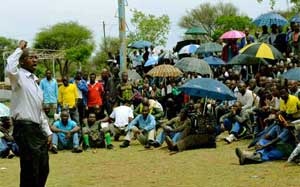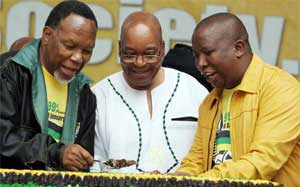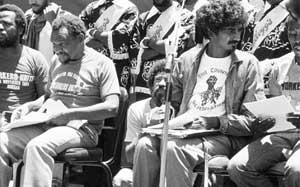
Anglo's platinum operations are not "unprofitable". Rather, they are not "profitable enough". Plans to restructure will jeopardize the income of 14 000 workers and more than 100 000 dependents. AMCUs call to nationalize in response reflects the growing consensus on...
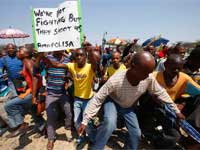
strike
Farm strikes: Radical changes needed.
Farm workers began the centennial year of the 1913 Land Act with a continuation of the most militant industrial action in the sector in decades. On January 9th, various Western Cape farming towns were turned into warzones as protestors demanding an increase to a...
Marikana mine massacre: why British lawyer has joined fight for justice
James Nichol explains his decision to volunteer to represent forgotten families of dead strikers When South Africa's apartheid police massacred 69 people in Sharpeville in 1960, the revulsion spread as far as northern England. James Nichol, then 15, took part in his...
“The strength of Cosatu still lies in its members”
Interview with Eddie Webster, director of the Chris Hani Institute Edward Webster is Professor Emeritus in the Society, Work and Development Institute (SWOP), at the University of the Witwatersrand. He was recently appointed director of the Chris Hani Institite (CHI)...
Harvesting discontent
"I earn R800,00 per month and with this money I have to feed, clothe and fend for my family of eight. We barely survive; I cannot even afford to buy school shoes for the children. I cannot take it any longer"- Gertie Beukes, Ashton farmworker. "We produce the food...
Whose strike to whose gain? | by Christian Selz
Alongside the prominent demand for R150 a day, striking farm workers in the Western Cape are demanding an end to labour brokering – an uphill battle that they are likely to lose given that some of their perceived leaders appear to trade in that very business. It is...
Neoliberal land & agricultural policies at heart of farm strikes | by Mazibuko K. Jara
The heroic and historic strike by thousands of farm workers in the Western Cape has struck at the heart of the ANC government's neoliberal policies on land reform and agricultural policy. The strike marks the beginnings of much-needed mass struggles to challenge white...
‘We cannot walk freely’| by Jeanne Hefez
Voices from Marikana: Lonmin workers speak It's nearly four months after the Marikana massacre, and the atmosphere in and around Lonmin is still one of fear in the face of a de facto state of emergency. As Amandla! goes to press, police continue to use excessive force...
Embryos of working-class power and grassroots democracy in Marikana
The formation of a workers' committee is an act of power by the working class. It has shaken capital by advancing far beyond trade union bureaucracy. The workers' committee in Lonmin had only been in existence for a week when the Marikana massacre took place on the 16...