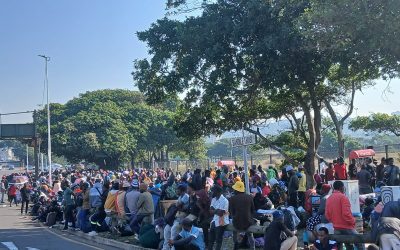
Addressing the deep socio-economic crises in South Africa requires moving beyond divisive politics and xenophobia, and towards an alternative path rooted in empathetic listening and understanding.
Pan-Africanism
A brief snapshot of global migration
People migrate for diverse reasons, including education, family livelihood diversification, and fleeing socio-political conflicts, natural disasters, and regional economic crises.
A fiery baton: to the youth, we have organising to do, majita!
In the inaugural episode of the Mabaphil’ABANTU podcast, Dinga Sikwebu, Sindisa Monakali, and Yolanda “Bunny” Sewela share their reflections on activism and community building. Mabaphil’ABANTU serves as a movement space that fosters connections among activists and abantu, drawing insights from their personal journeys toward justice.
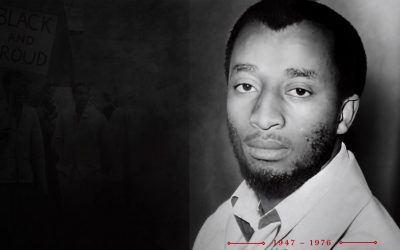
Resisting Erasure: A 50-Year Tribute to Cde Mapetla Mohapi
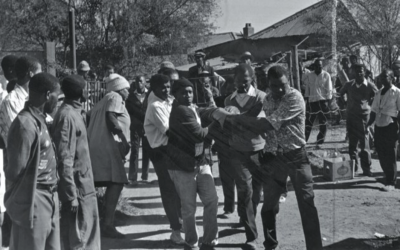
Mapetla Mohapi was the first person to be detained under Section 6 of the Terrorism Act.
Understanding the rise of Afrophobia in South Africa — and how we resist it
Afrophobia is rooted in exclusionary ideas of citizenship and belonging that were shaped by colonialism and reproduced by postcolonial states.
JOINT PRESS STATEMENT: Statement of outrage against the weaponisation of xenophobia and the brutal and unlawful treatment of migrants, including refugees and asylum seekers
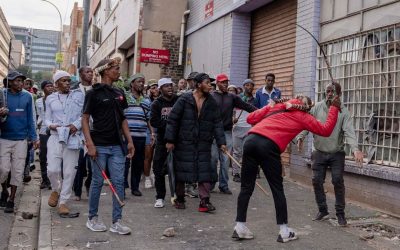
Various organisations and individuals have condemned the aggressive approach of state officials towards the safety of migrants, including refugees and asylum seekers, amid rising anti-migrant rhetoric and vigilantism in South Africa.
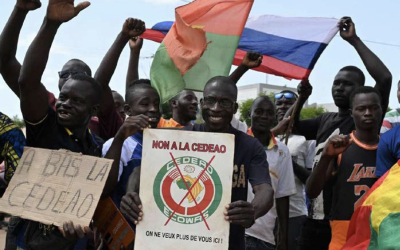
Burkina Faso: Traoré, a conservative, anti-democratic despot
‘It is impossible to understand Burkina Fasso’s two coups without considering the dominant fact in the Sahel at that point: the Jihadist war that has been raging in Mali since 2012, and has engulfed Burkina from 2016–18 onwards’ ~ Rahmane Idrissa.
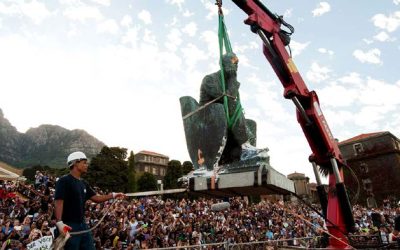
Reflections on 10 years of Rhodes Must Fall
The Rhodes Must Fall (RMF) movement was about more than the removal of a statue; it sought to make visible and challenge the structures of oppression the statue symbolised.