The triple disaster of 11 March 2011 constituted a major turning point in contemporary Japanese history — its political impact is not however unequivocal. It has provoked a radical break in the way in which many Japanese people perceive the authorities and...
chinese
What interests lie behind the Sudan-South Sudan conflict? | by Gavin Jackson
Following the declaration of independence by South Sudan – which is dependent on financial and military aid from American imperialism – tensions between Khartoum and Juba have been steadily ramped up over the past year and have brought death and destruction both sides...
Angola helps out Portugal | by Augusta Conchiglia
The former colony has become an unexpected source of jobs and investment for Portugal in the global downturn. Angola is Sub-Saharan Africa’s third largest economy, after South Africa and Nigeria (1). It is already one of Africa’s biggest oil producers, with an average...
The World Seen from the South | by Samir Amin and Irene León
Edited from an interview with Samir Amin conducted by Irene León Irene León: I would like to focus this interview on three distinct but related questions: your vision of the world and the possibilities of changing it; your conceptual and political proposal on the...
Can the green economy solve China’s development and environment challenges? | by Dorothy Guerrero
In acknowledging the many challenges that it is facing in achieving its development goals and addressing environmental problems, China has embarked on reforms aimed at rebalancing its economy to address its own problems and help in the global effort to abate climate...
Zimbabwe’s clogged political drain and open diamond pipe | by Patrick Bond and Khadija Sharife
Progress in Zimbabwe won’t begin until the political drain is unclogged in the wake of free and fair elections, and until the pipe leading from one of the world’s largest-ever diamond finds to corrupt military coffers is conclusively blocked. While GDP growth has been...
China cannot save the world from the economic crisis | by Bruno Jetin
While North America and Europe were hard hit, China has survived the international crisis of 2008, thanks to huge public spending, a low interest rate and consumption subsidies. China’s growth rate reached 9% in 2009 and 10.4% in 2010; in its wake, China dragged Asia...
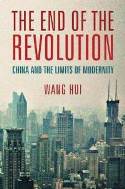
The End of Revolution: China and the Limits of Modernity | by Wang Hui
The publisher of Wang Hui’s book described it as follows: "arguing that China’s revolutionary history and its current liberalization are part of the same discourse of modernity, Wang Hui calls for alternatives to both its capitalist trajectory and its authoritarian...
Red Capitalism: The Fragile Financial Foundation of China’s Extraordinary Rise | by Carl E Walter and Fraser JT Howie
Serious capitalist representatives and Marxists often have shared analyses of events. Where they differ is in the diametrically opposed class conclusions that they draw from these. This important book on China illustrates this well. The authors have the advantage of...