
The National Dialogue is being promoted as a moment of reckoning, a grand exercise in consultation to address South Africa’s deep-seated socio-economic and political crises. But beyond the rhetorical flourishes and declarations of inclusivity, the true function of this dialogue is becoming increasingly clear: it is a manoeuvre to stabilise a faltering elite consensus. It is an attempt to absorb popular discontent into a managed political process that ultimately safeguards the status quo.
We cannot ignore the material reality within which this dialogue is emerging. The formation of the coalition Government of National Unity (GNU) is not a democratic renewal but an act of elite crisis management. The National Dialogue is meant to lend legitimacy to this new arrangement, to pacify discontented masses while preserving the power of capital and entrenched interests.
How should popular forces engage?
So we must be clear-eyed about the risks of co-option. But we should not assume that workers, poor people, marginalised communities and the general public will instinctively reject elite processes like the National Dialogue. For many, it may still appear as a space in which to contest and assert demands. Even if there may still be mass apathy, the National Dialogue is not irrelevant and must not be dismissed. It is likely to have long-lasting impacts through the envisaged social compact. Popular and left forces would be tragically mistaken to ignore or dismiss it. They must engage with, beyond and against it all at the same time. This requires strategic nouse, as a contribution to the rebuilding of radical popular power.
This presents us with a strategic dilemma. On the one hand, there is the real danger that popular organisations will be drawn into the dialogue on terms that neutralise their power and autonomy. On the other, disengagement leaves the field open for business, the political elite, and mainstream civil society to dictate the terms of the discussion. The challenge, therefore, is to forge an approach that does not lend undue legitimacy to the process, but instead seizes the moment to build independent mass power.
The real stakes: a people’s agenda for justice
If the National Dialogue is to be anything more than a cosmetic exercise, it must confront the fundamental crises gripping South Africa: the collapse of local governance, land and agrarian injustice, deepening inequality, and the corporate stranglehold over economic policy. These are the pressing issues that a people’s movement must force onto the agenda—not as items for negotiation, but as non-negotiable imperatives for transformation.
Of course, this is not what the political elite wants. The national dialogue happens within the context of deepening neoliberal social crisis: increasing unemployment, poverty, inequality, underemployment and collapsing public services by the government due to corruption. The logic of the elite is to present a scenario where there is no alternative to neoliberalism—the solution to the crisis is more neoliberalism, despite its gross failures. In line with this logic, the dominant narrative today asserts that only the private sector can create jobs or run railways or harbours or electricity, or other key sectors in the economy. The public sector is presented as simply inefficient, corrupt and useless.
This approach will keep South Africa as an untransformed economy that will not fundamentally change the socio-economic conditions of the majority.
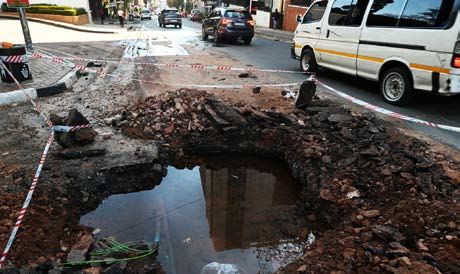
Local government is collapsing under the weight of elite corruption and fiscal austerity. We must demand a radical restructuring of local governance, where communities exercise direct control over budgets, planning, and service delivery.
This underlines the need for popular and Left forces to develop and drive a strategic vision, agenda and programme of reclaiming and rebuilding an efficient, accessible and working public sector, across all social services and key economic sectors. As the history of economic development across the world shows, it is not the private sector that can give us a decommodified, high-quality public transport system. It is the mobilisation of public resources. institutions and capacity. As the privatisation of renewable energy shows, the private sector invests in such infrastructure in ways that meet limited needs for profit-making whilst excluding the majority, and this is often done in socially inefficient ways.
The logic of mass movements should be to present social justice demands that address the manifestations of the deepening neoliberal social crisis, in a manner that exits the crisis, instead of the futile attempt to manage it. Key demands concern the municipal crisis, land redistribution, and economic justice. These are demands for the National Dialogue and also areas of sustained mass struggle beyond the National Dialogue.
The municipal crisis: Local government is collapsing under the weight of elite corruption and fiscal austerity. We must demand a radical restructuring of local governance, where communities exercise direct control over budgets, planning, and service delivery. This means dismantling the neoliberal logic that treats basic services as commodities rather than public goods.
Land redistribution: The National Dialogue cannot be allowed to sidestep the urgency of this issue. Despite the end of apartheid, land ownership remains grotesquely skewed, and corporate agriculture continues to dominate food systems at the expense of small-scale farmers and rural communities. A transformative land agenda must be driven from below, with mass mobilisation ensuring that redistribution is not a technocratic process but a radical restructuring of ownership and control.
Economic justice: The demand for extending the Social Relief of Distress Grant into a Universal Basic Income Grant, costed at R1,500, is fundamental as it will change the livelihoods of many, whilst also contributing to local economies. We must build mass power to force an end to fiscal austerity. South Africa needs an expansionary budget and a flexible monetary policy. We must use the moment of the National Dialogue to lay the foundations for a people’s movement for a more equal, democratised, socially owned and ecologically sustainable economy, based on people’s solidarity, that serves people’s needs first.
For the Dialogue, we must concretise this broad framework through demands focused on a living wage policy: a decent minimum wage; expanded public employment programmes; socially owned renewable energy; a new and healthier food economy (based on agro-ecology; redistributive land reform and a transformed value chain); healthier and climate-wise housing based on the more democratic people’s housing process which is already part of government policy; and a transformative just transition transport system based on providing a public good.
Together with these demands, popular movements must also challenge the dominance of business and reclaim constitutional democracy from below. The dialogue will inevitably be shaped by the disproportionate influence of business, particularly through formations like Business Unity South Africa (BUSA). Capital’s interests are clear: maintain a low-wage regime, entrench corporate tax avoidance, and keep economic policy aligned with global financial markets rather than local development needs.
A people’s alternative must expose and challenge this power, asserting demands for wealth taxes, public investment in industrialisation, and the expansion of universal social protection.
Reclaiming constitutional democracy: As we approach the 30th anniversary of our Constitution in 2026, we must resist attempts to dilute its transformative mandates. The GNU may attempt to use the National Dialogue to cement a new political settlement that backtracks on social justice commitments. Instead, we must reaffirm the Constitution as a living instrument of radical justice, not a shield for economic privilege.
Beyond the Dialogue: building a people’s movement
Ultimately, our task is not simply to engage with the National Dialogue on its own terms, but to use this moment to galvanise a broader movement for systemic transformation. This means rejecting passive participation, and instead forging a parallel process from below—a people’s dialogue—where grassroots organisations, workers, unemployed youth, and poor communities articulate their own vision for the country, and build a political programme to achieve it.
A People’s Dialogue process from below would not merely react to elite processes but actively shape an alternative future. It would:
- Convene independent platforms that bring together progressive movements to build a shared programme of action.
- Mobilise direct action, from community occupations to national days of protest, to ensure that popular demands cannot be ignored.
- Develop concrete policy proposals on land reform, public ownership, and economic justice to counter neoliberal frameworks.
- Challenge the legitimacy of elite-driven consensus-building while building democratic alternatives rooted in mass participation.
The National Dialogue cannot be allowed to become a containment strategy for the political elite. The moment demands an uncompromising movement that refuses to be co-opted and remains steadfast in its insistence on structural change. This is not the time for compliance or symbolic engagement; it is the time for mass struggle, for a renewal of popular power that asserts itself beyond the limits of elite negotiation.
If we are to honour the struggles that brought us to this point, we must recognise that the future will not be determined in boardrooms or government summits. It will be forged in the streets, in community assemblies, in worker mobilisations, in the assertion of a radical alternative from below. The National Dialogue may be their project, but the fight for justice remains ours.
Mazibuko Jara is a Marxist based in Keiskammahoek. He is the executive director of the Zabalaza Pathways Institute.