
Over the past weeks, I have travelled to a number of communities in Mpumalanga, Gqeberha, Makhanda, Botshabelo, and the Vaal. What I encountered was not just hardship, but a profound crisis gripping working-class communities across South Africa. In every town and township, the same story emerges: people are living in deteriorating conditions. They have been abandoned by a state that has embraced neoliberalism and austerity. They have been betrayed by municipalities that are dysfunctional, corrupt, or simply incapable of delivering even the most basic services.
The consequences are visible and deeply felt. Infrastructure is crumbling, water is often unsafe or unavailable, electricity is unreliable and unaffordable, and young people are trapped in joblessness and despair. Families are surviving on social grants and informal hustles, but the social fabric is under strain. Many of the comrades I met are activists rooted in their communities and committed to social justice. They are themselves overwhelmed. They face the dual burden of organising while also struggling to meet their own basic needs. Despite their passion and commitment, they are starved of resources, political support, and organisational infrastructure.
And it is heartbreaking to see people you grew up with live from hand to mouth, selling loose cigarettes, washing cars, or relying on social grants, just to put food on the table.
Social crisis rooted in deindustrialisation
This state of the working class and its movements did not just happen. Over the past three decades, deindustrialisation has gutted South Africa’s working-class communities, leaving behind unemployment, poverty, and social decay.
In the Western Cape, once-thriving textile and clothing factories in areas such as Elsies River, Salt River, and Paarl have shut down as cheap imports from Asia flooded the market. This wiped out tens of thousands of jobs and hollowed out union strongholds like SACTWU.
In the Eastern Cape, the automotive industry—once the backbone of cities like Uitenhage (now Kariega) and Gqeberha—has been hit by automation, outsourcing, and global cost-cutting. This has led to retrenchments at companies such as Volkswagen SA and Mercedes-Benz.
In Gauteng, the collapse of the steel and metal industries, particularly at ArcelorMittal and surrounding suppliers in Vanderbijlpark and Ekurhuleni, has devastated towns that depended on industrial wages.
Meanwhile, in the agricultural sector, especially in Limpopo, Mpumalanga, and the Western Cape, South African farmworkers have been pushed out and replaced with migrant labour from Zimbabwe, Lesotho, and Mozambique, creating divisions within the working class and fuelling xenophobia.
These shifts have weakened trade unions that once represented working-class unity and political power.
Social consequences of economic crisis
With the severe attack on the economic base of our class, there follows the collapse of its very being: its organisations, its confidence, its consciousness, its ability to unite society and be a beacon of hope and future.
Desperation also feeds dangerous ideas—xenophobia, homophobia, patriarchy—as anger and frustration turn inwards, rather than against the system. The weakness of popular organisations leaves a vacuum that is filled by fear, mistrust, and division instead of solidarity and collective struggle.
The rise of the Operation Dudula movement has created inhumane and dangerous conditions in many working-class communities. It is shameful that the once-mighty South African working class and communities could rally behind slogans of disgusting right-wing forces, under the slogan “putting South Africans first”. Operation Dudula groups have organised intimidation campaigns at clinics and hospitals, blocking foreign nationals from accessing healthcare.
Instead of uniting around shared struggles for decent healthcare and better living conditions, the working class is being divided and dehumanised, turning desperation into cruelty. This is the working class today.
Our people are living in filth, clinging to life by their fingernails. We have been abandoned by the traditional political leadership and national liberation organisations. We are on our own.
Crime and violence have created an atmosphere of fear and intimidation that hangs heavily over community activists across South Africa. In many areas, organising for clean governance or basic services has become a life-threatening act. Activists are harassed, assaulted, and in some cases assassinated in what are increasingly referred to as political killings.
In KwaZulu-Natal, leaders of movements like Abahlali baseMjondolo have been repeatedly targeted—with more than two dozen members murdered since 2009, often after exposing corruption or resisting illegal evictions. In Mpumalanga, Eastern Cape, and the Free State, activists challenging tender corruption and service delivery failures face similar threats from local political networks linked to gangs and business interests. Meanwhile, the police often arrive late, investigate poorly, or look the other way, leaving the poor defenceless.
This climate of fear isolates comrades, weakens grassroots organisation, and sends a chilling message that speaking truth to power can cost one’s life.
In many working-class communities across South Africa, poverty and hunger have reached devastating levels. It is now common to find families going to bed with nothing but water or tea in their stomachs. In informal settlements around cities like Makhanda, Khayelitsha, and Emalahleni, children wake up and go to school without breakfast. Their parents have gone days without income. Teachers report pupils fainting in class or struggling to concentrate because of hunger, while clinics record rising cases of malnutrition and stunted growth. These are visible in the thin arms, swollen bellies, and tired eyes of young children.
This slow violence of hunger robs a generation of its physical and mental development, breeding deep frustration and despair among youth who see no future for themselves.
Without strong community organisations or leadership to channel this anger into a collective struggle, it often turns inward. It becomes violence in homes, substance abuse, crime, or vigilante violence—tearing apart the social fabric that once held communities together.
Vigilante killings applauded

A vigilante killing in Phillippi, Cape Town. In Langa, where I stay, a few weeks ago, the residents were so fed up with crime that they dragged the mapharamaphara (criminals) out of their shacks early in the morning while sleeping. Two of them were burnt to death, wrapped in their mattresses and blankets.
In Langa, where I stay, a few weeks ago, the residents were so fed up with crime that they dragged the mapharamaphara (criminals) out of their shacks early in the morning while sleeping. Two of them were burnt to death, wrapped in their mattresses and blankets. Their bodies were left in the open for residents passing by to take photos that were trending on social media.
What was striking for me was not only the barbaric act, but the fact that Langa residents on social media were applauding it—Good for them! We’re tired of these criminals! How can a community turn in on itself like this? Why are we eating our own?
The same thing happened in Wallacedene in Cape Town. Two guys accused of stealing something were burned alive in the open in the streets. Again, the community rejoiced: Burn them! Burn them!
Malnutrition, child deaths and hunger
Hunger and malnutrition are widespread:
- A UNICEF report in 2024 found that about 23% of South African children suffer from severe food poverty. This puts them at high risk of malnutrition and the health issues that accompany it.
- In Gauteng province, budget cuts have delayed payments for the extended school nutrition programme. This has caused children in fee-paying schools (many of whom are poor) to arrive at school without breakfast or food.
- Nearly 11,000 South African children die from hunger and malnutrition each year. This is a completely preventable tragedy.
Political killings of activists
As if this attack on the working class and poor from hunger and poverty is not enough, the activists who are trying to organise are doing so under threats, intimidation, fear, assassinations, murders and political killings:
- Ayanda Ngila (deputy chairperson of Abahlali baseMjondolo in the eKhenana Commune, Durban) was shot and killed on 8 March 2022 while fixing an irrigation pipe in the community garden. The killing is associated with local political and business interests; arrests were made in connection with the crime.
- Nokuthula Mabaso, a prominent female leader in the eKhenana Commune (Abahlali baseMjondolo), was assassinated in her own home in front of her children on 5 May 2022. She had been a leader in the women’s league and involved in communal food sovereignty work.
- Lindokuhle Mnguni, another leader in the eKhenana Commune and chairperson of its youth league, was murdered on 20 August 2022. He had been involved in the food sovereignty project, which is aimed at helping the settlement become more self-sustaining.
In Khayelitsha (Cape Town), ANC ward convenor Myolisi Magibisela was gunned down at his home in Makhaza. He was a local organiser (Ward 96, Sanco zonal chairperson). His killing is seen as part of a larger pattern of community activists being threatened and attacked.
In the Eastern Cape, Pamela Mabini, a community activist and whistleblower, was shot and killed outside her home in Kwazakhele (Gqeberha). She had been active in efforts to restore dignity, reduce violence, and support victims. She had acted as a witness in high-profile abuse and trafficking cases.
While the activists are being intimidated and killed, they are needed to organise in their communities, to defend the working-class poor against these attacks and to fight for the dignity of their people.
Collapse of public services
Across South Africa, the collapse of public services is one of the most visible and painful outcomes of years of austerity and neoliberal policies. Budget cuts to municipalities, clinics, schools, and water and sanitation departments have left many communities without basic services. Taps run dry, sewage flows in the streets, clinics run out of medicine, and rubbish piles up uncollected. In places like Emfuleni, Makhanda, and Msunduzi, the breakdown of water and electricity systems has turned daily life into a struggle for survival.
This decay has destroyed the sense of collective care and social cohesion that once bound communities together. There are no functioning public spaces, youth programmes, or community initiatives. The erosion of the commons—schools, clinics, parks, libraries—has meant the erosion of solidarity. This leaves working-class people divided, fearful, and vulnerable to manipulation by populist and reactionary forces.
Organising in the social crisis
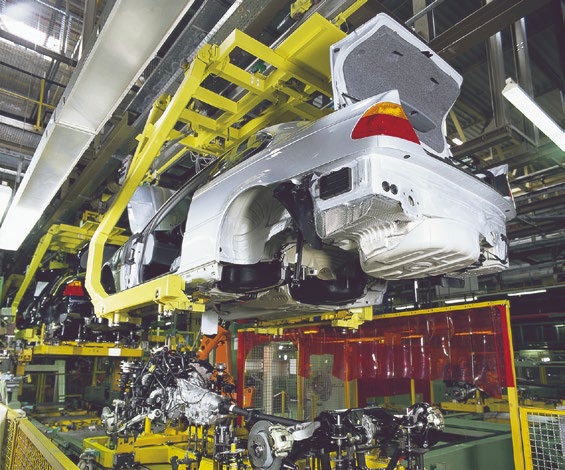
Over the past three decades, deindustrialisation has gutted South Africa’s working-class communities, leaving behind unemployment, poverty, and social decay. In the Eastern Cape, the automotive industry has been hit by automation, outsourcing, and global cost-cutting.
Under these harsh conditions, it becomes extremely difficult to organise in communities or workplaces: we are too consumed by immediate survival, our movements are fragmented, and comrades are often isolated. Hunger, unemployment, and daily survival leave little energy or time for collective organising. The balance of power overwhelmingly favours the enemy: capital, the state, and the political elite, who control resources, jobs, and the narrative. There is low political education and a serious shortage of committed cadres capable of providing leadership and strategy.
Many of the activists we depend on to build the movement have no income. They live in poverty and must constantly find ways to feed their families. It is not surprising that some disappear when offered even the most precarious jobs—whether as local government election campaigners or, worse, through networks tied to the underworld and gang structures. In many communities, the gangsters are better organised than the Left: they recruit, induct, and provide livelihoods to their members, giving a sense of belonging that our movements are currently unable to do.
If we want to be taken seriously and rebuild working-class power, we must confront this reality and find ways to offer political purpose, material support, and collective strength that can compete with the power of fear and desperation.
Without a national movement to unite local struggles and build provincial solidarity, comrades remain isolated, each fighting alone in their corners.
Socialists must support the green shoots
There are signs of resistance and renewal. Across the country, ordinary people are organising—in workplaces, townships, informal settlements, and rural areas—to fight for jobs, decent housing, clean water, electricity, and accountable leadership. Although trade unions are weakened and divided, they continue to play a role in defending workers’ rights. New formations of the unemployed, community movements, women’s groups, and climate justice activists are emerging to fill the vacuum left by traditional organisations. Together, they represent the potential raw material for a new working-class movement that could challenge both state neglect and corporate power.
We cannot build a political organisation without first addressing the immediate needs of the people. The working poor, their communities, and the activists must be protected, their welfare secured, and their dignity restored. Socialists should throw their weight behind building community and worker forums and fronts that campaign to revive, rebuild, and restore communities. Through these struggles—aimed at winning small but meaningful reforms—the confidence of the working class can be gradually rebuilt.
It is in these struggles that cadres are identified and trained in the university of life, in campaigns, and in practical experience. It is through these struggles that livelihood initiatives are designed to fight poverty, that political education rooted in people’s lived experiences is developed, and that committed activists emerge. It is the task of a socialist to accompany these activists, helping them understand that reforms alone are not enough, and that a new world must be built through socialist and Marxist politics. So socialists must be an integral part of the working poor’s struggle to defend themselves.
And we need an organisation that can bring together the struggles from around the country, both urban and rural. So we need to build the Cry of the Xcluded in our communities to fill the deep vacuum left by the absence of a national movement that unites workers and communities. Without such a coordinated force, our struggles remain isolated, weak, and easily crushed. And the Cry of the Xcluded must rebuild trade union locals, strengthen worker organisation, and provide solidarity to shop stewards and worker activists in struggle.
Madoda Cuphe is an activist who works for the movement support unit of AIDC and is a member of ZASO.