

Universal access to electricity is essential for equitable development: electricity enables a higher standard of living, and access to better and cheaper food (through home cooking and refrigerated storage), and it is essential for almost every home-based or small enterprise. One of South Africa’s priority policy goals since 1994 has been to ensure that everyone – no matter how poor they are – can use basic services like electricity to improve their lives. The 1994 Reconstruction and Development Programme (RDP) emphasised the critical role of universal access to services in meeting the country’s development goals (Section 1.4.2.)
The first priority is to begin to meet the basic needs of people – jobs, land, housing, water, electricity, telecommunications, transportation, a clean and healthy environment, nutrition, healthcare and social welfare.
As a result, hundreds of billions of rands have been invested in extending infrastructure to previously unserviced areas.
But physical access alone doesn’t deliver comprehensive development benefits. A connection to the electricity grid is of limited value when the user cannot afford to access the amount of electricity they require to improve their lives.
Access to services only fulfils an equitable development mandate (rather than a basic survival mandate) when everyone can access a certain minimum amount of services. A survival level of access only supports the lowest standard of living and offers no opportunities to engage in socioeconomic activity that will lift people out of poverty. By contrast, a developmental level of access will allow households to cook regularly (which usually results in more nutritious and cheaper food consumption) and to engage in small-scale economic activities. Research indicates that households that can access sufficient electricity are more likely to start their own micro enterprise than those that cannot.
Genuinely pro-poor, pro-equity policies for the provision of basic services must aim to progressively deliver a developmental level of access for everyone. They must not stop at a survival level.
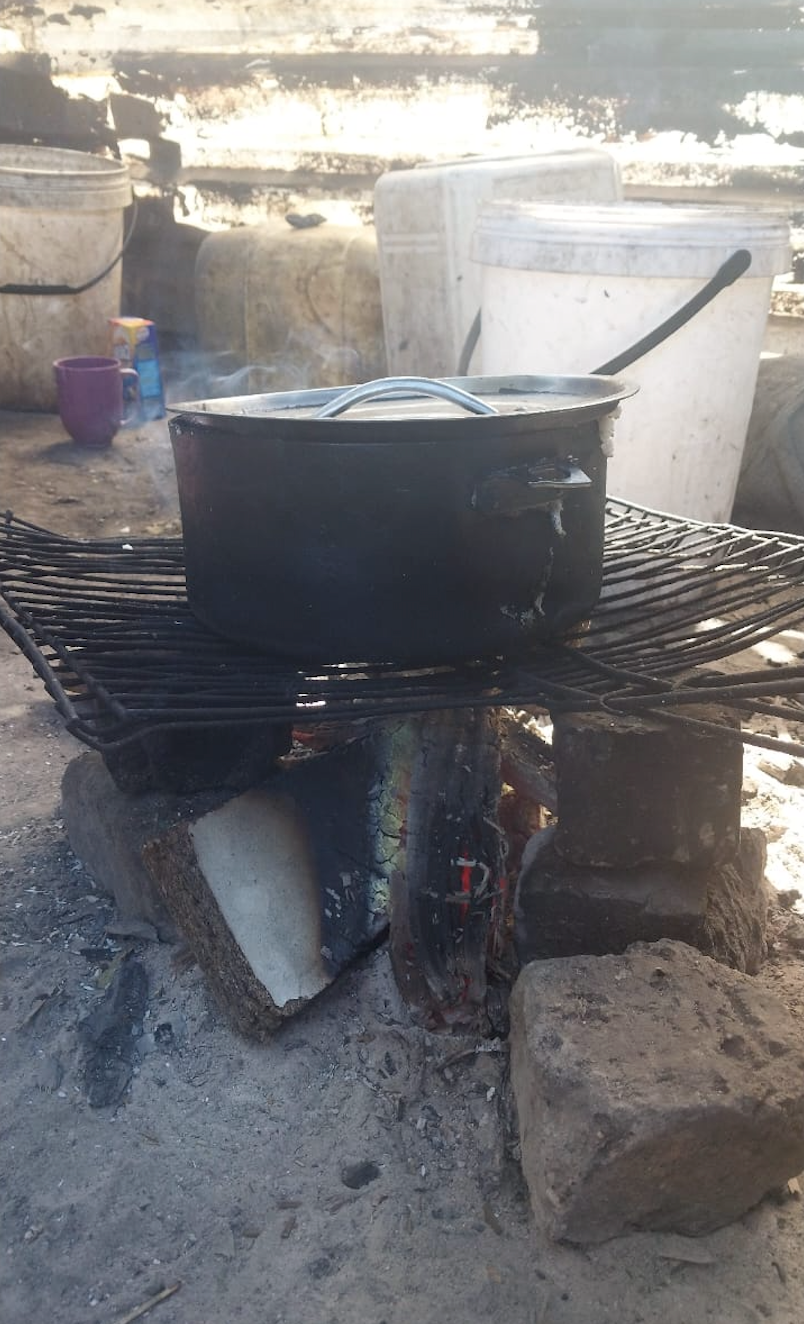
The high level of poverty in South Africa is the greatest obstacle to households and small enterprises being able to use sufficient electricity to improve their lives and generate incomes.
Research from the Public Affairs Research Institute (PARI) suggests that a developmental level of electricity for a household where it is the sole source of energy is 350kWh per month. This allows for cooking every day, use of basic electrical appliances, lighting and access to information services. The long-term policy priority for access to electricity should be to ensure that every household can access this amount of electricity. A realistic, medium-term goal could be set at 200kWh/household per month, given current budgetary constraints.
Affordability is the greatest barrier
The high level of poverty in South Africa is the greatest obstacle to households and small enterprises being able to use sufficient electricity to improve their lives and generate incomes. In recognition of this, most of South Africa’s electricity policies are clear that tariffs must be “affordable”.
The current approach to affordable service delivery for low-income households is a combination of (i) free services and (ii) payment on a sliding (cross-subsidised) scale for consumption above the amount of free services. In theory, this is a model that could deliver universal developmental access, but whether it actually does depends on two critical factors:
- The quantum of the free services compared with the developmental level of access, and
- The cost of the balance of services that households must pay for over and above the free amount to reach the developmental level.
Currently, the national free services programme allocates just 50kWh per household of free electricity each month. So the free allocation makes up only a small part of what households require (14% of the developmental level), and they must pay for the balance. But can low-income households actually afford that additional electricity?
What are “affordable” tariffs?
Most of South Africa’s policies that deal with the delivery of basic services contain the objective of ensuring that these are affordable. But there is generally very little (or nothing) in the way of concrete affordability standards against which this objective can be assessed. What is an affordable monthly tariff for electricity? R300? R500? Policymakers do not currently have an answer to this question. Without a clear understanding of what level of tariff is affordable (in a pro-development context) for each category of user, we cannot assess whether a tariff meets the affordability objective.
The issue of affordability is not addressed to any meaningful degree during annual electricity tariff setting processes, either by municipalities or by NERSA. Blanket statements about whether proposed tariffs are ‘affordable’ or ‘unaffordable’ are never backed up by detailed empirical analyses that compare the cost of services to household income and poverty.
How to measure affordability
Globally, the most used way of measuring affordability is to calculate the percentage of income that is actually spent on a service. The most common measures indicate that households should spend no more than 10 per cent of their total household income on electricity.
However, there are several problems with using this approach in a high-poverty environment such as South Africa:
- The ‘percentage of income’ approach measures how much a household is actually spending on services. The poorer the household, the less money they will spend, by self-limiting usage to levels well below what would be considered developmental. The fact that expenditure on a survival level of services is below an upper limit does not automatically mean that the cost of that service should be considered affordable. We want to know how affordable the developmental level of usage is, not the current (survival) level.
- It is problematic to use a percentage-of-income approach in a high-poverty environment where many households have very small incomes and food insecurity is high.
The human-rights-based approach to affordability proposed in the water sector by the UN Special Rapporteur takes a relative approach towards affordability. It stipulates that a service can never be considered affordable if it requires the household to sacrifice other basic needs, such as food. This relative approach gives a much clearer picture of the poverty (development) implications of a certain level of tariffs. Black Sash research indicates that food is the main item that poor households sacrifice to pay for electricity. If payment for household services requires reducing the household food budget to a below-adequate nutrition level, then the net developmental impact is negative, and the cost of services should automatically be deemed unaffordable.
So how affordable are current tariffs?
PARI has undertaken detailed research to determine the affordability of electricity and water tariffs for poor households. We combined water and electricity costs in our assessment because households have to pay for both services, so they impact the affordability of each other. The assessment was made based on these calculations (for the cost of electricity and water, we used the average of tariffs across metros and, for electricity, Eskom):
- Total household income – basic food expenditure requirements = post-food income
- Post-food income – cost of electricity and water = residual income
So the residual household income is the income that is left to pay for all other household expenses, such as accommodation and transport. For the purposes of this study, we assumed that, if it is less than R900 (i.e. R30 per day), then the cost of those services should be deemed unaffordable. This is a very conservative approach, since most households require more money than this to pay for all those other items.
Our results showed the following:
- About 25% of the population lives below the food poverty line. For those households, there are no scenarios where the household can afford to purchase any level of services, even if food consumption is restricted to below an adequate nutrition level. The reality for these households is that they generally consume even less than the calorie-sufficient amount of food in order to pay for other basic essentials. This contributes directly to South Africa’s high levels of child malnutrition and a significant burden of non-communicable disease related to poor diet. 28 per cent of South African children under the age of 5 are classified as malnourished. Diabetes caused by poor nutrition is now the leading cause of death among Black women in South Africa.
For these households, the only ‘affordable’ services are free services.
2. Another 15% of the population live above the food poverty line, but below the lower bound poverty line. For these households, there is also no scenario where any level of service payment could be considered affordable. Even if the household limits its food consumption to below what is necessary for basic nutrition and receives all the free services, the residual income remaining is below the threshold R900 per month level.
So for households living below the lower-bound poverty line (40 per cent of the population), there is no scenario in which the current cost of services can be considered affordable within the context of South Africa’s national development objectives around food security and using services to improve standards of living. These households cannot afford to pay anything for services.
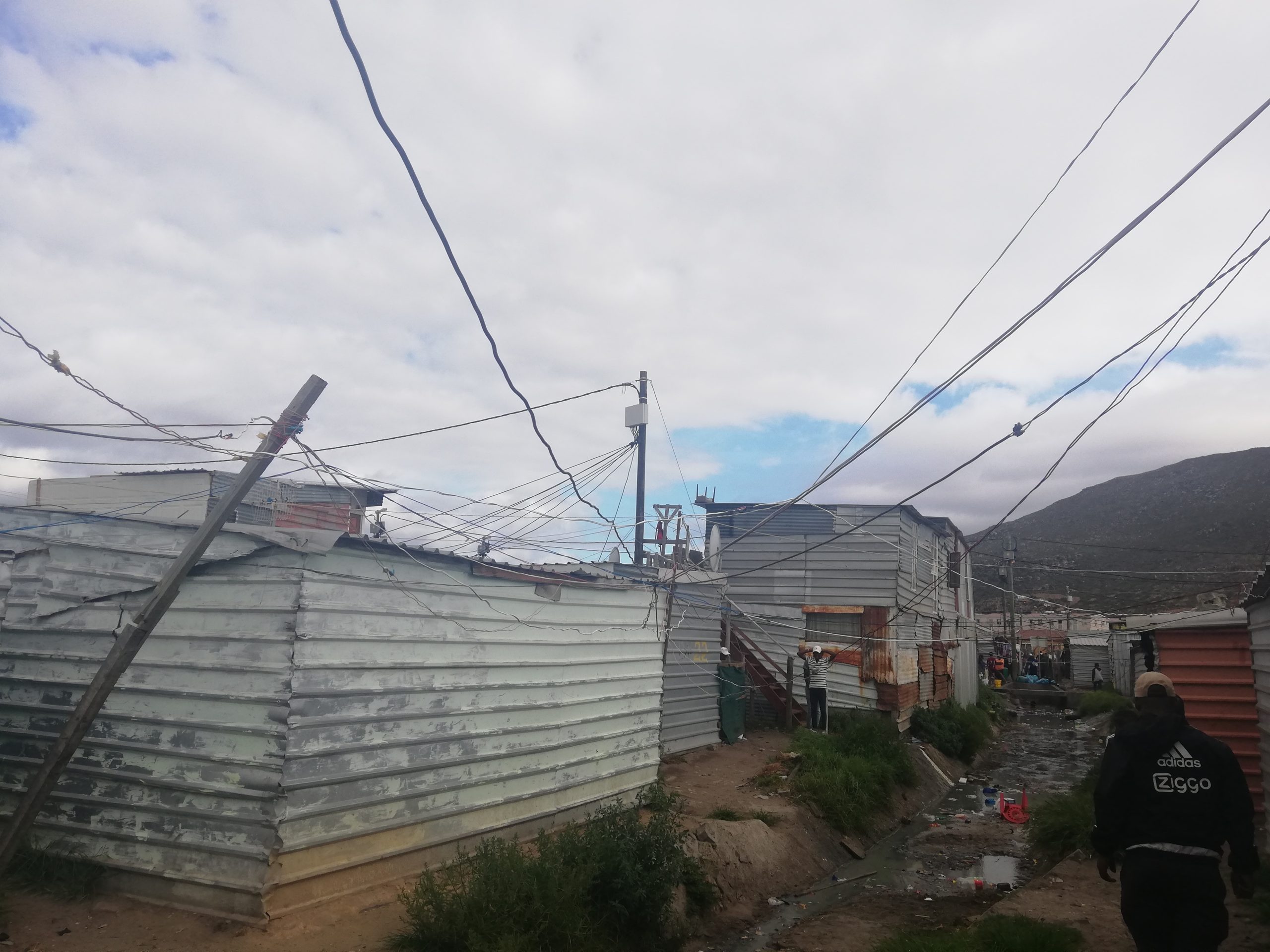
Households either resort to illegal connections or limit consumption to the free services allowances or get into debt to pay for services. None of these outcomes supports a developmental agenda.
The result of this situation is that households either resort to illegal connections or limit consumption to the free services allowances (in those households where they do actually receive this) or get into debt to pay for services. None of these outcomes supports a developmental agenda. The only way in which these households can access services in a sustainable manner to support socioeconomic development is if those services are free.
The current unaffordability of services is critically undermining the impact of the remainder of the social wage package: the reality is that social grant recipients are often not using their grants received from the state to improve their nutritional status. They are using them to pay another part of the state for survival levels of water and electricity.
In 2017, research concluded that there are two main reasons why the introduction and expansion of the social grant system have not translated into the expected improvement in general nutritional status: 1) food prices have increased faster than grants, and 2) there are multiple other claims on that income. Notable among these is the rapidly increasing electricity price. Black Sash found that the main reason why childcare grant recipients borrowed money was to pay for electricity. The same report found that grant recipients regularly trade food expenditure for electricity purchases.
What does this mean for electricity tariff-setting policy?
The current approach to electricity tariff-setting is that service providers (municipalities and Eskom) calculate the cost of providing the service, and then apply to NERSA for a tariff that covers that cost. Most service providers use a sliding scale of tariffs, where those who consume more partly subsidise the tariffs of those who consume less. However, the overarching approach is to have tariffs that reflect cost.
The inability of households to afford electricity is often used as the basis for a proposal that we need tariffs that are lower than the cost recovery level, and that the state should compensate service providers for the difference.
We do not believe that this is the best approach to addressing affordability; it may, in fact, cause more problems than it solves. Instead, we believe that we need to have a process of accurate cost reflective tariffs (i.e. service providers must accurately calculate what it costs them to provide a service and tariffs must reflect that). We think the best way to support low-income households is through direct support (free services to qualifying households).
The main reasons why we support this approach are:
- It is imperative that we have an accurate calculation of what it costs to provide a service like electricity. Our long-term goal should be to make that cost as low as possible, but we cannot do that without an accurate cost determination. If tariffs are no longer based on costs incurred, then the incentive for service providers to manage costs is partly removed. The fact is that, under the current system. There is little incentive for Eskom to manage costs, with serious negative implications for economic development.
- More free services for lower-income households will result in more equitable outcomes and better targeting than subsidising tariffs, within the current fiscal constraints. So, the 40% of households which cannot afford to pay for services should receive a minimum developmental level of access to 200kWh of consumption for free. If we attempt to make the first 200kWh of consumption free for all consumers (through subsidised tariffs), this will represent a significant fiscal burden, and most likely can only be funded from cuts to other essential state expenditure. The equity impact is much greater if we focus funding on the poorest households, while other users pay a cost-reflective tariff.
- For much the same reasons, if we use lower tariffs to support poor households, we will only be providing them with part of the support that they need, since these households cannot afford to pay anything for the developmental level of services.
In summary, we recommend that the process of setting tariffs be separated from the process of supporting access for low-income households. The former should focus on cost-reflective tariffs, within a clear target of cost optimisation. The latter is best achieved by ensuring significantly higher levels of free services to qualifying households.
Tracy Ledger leads the Just Transition Programme at the Public Affairs Research Institute.