
President Cyril Ramaphosa’s State of the Nation Address was an exercise in spin. The claim that South Africa is on a path to recovery contradicts a harsh and worsening reality. Behind his optimistic rhetoric lies a country in deep crisis. And this is not only an economic or political crisis. It is a social crisis. A level of disintegration that has ended up with the deployment of the army into impoverished communities. The project of building national unity has failed. SA is a divided and polarised country
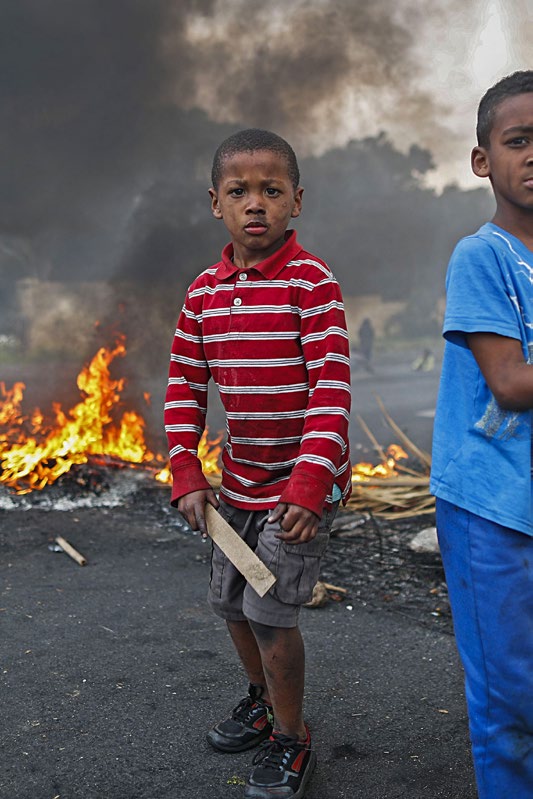
SONA failed to speak about the collapse of dignity for millions, the hunger, the communities in despair, and a generation of young people with no future.
This year’s SONA was all about structural reform, investment, and private sector partnership. It was about reassuring markets and investors. It was a brazen statement that Ramaphosa’s ANC is not concerned about its allies on the left.
So it failed to speak about the collapse of dignity for millions, the hunger, the communities in despair, a generation of young people with no future. Most dangerously, it did not confront the fragmentation of South African society—the disintegration of the very idea of a shared national project. Results of a Voter Participation Survey this week, produced by the HSRC for the IEC, show that “Popular support for democracy is at a historic low: preference for democracy fell from around 65% in the mid-2000s to 36% in 2025/26”.
The notion of a “state of the nation” assumes there is a nation to speak of: a people bound, however tenuously, by a sense of common belonging and purpose. What we are witnessing in slow motion is national disintegration.
SONA was myopic because it refused to recognise the structural roots of our crisis: the neoliberal restructuring of the South African economy. From the 1990s onwards, this has entrenched unemployment, deepened inequality, hollowed out the state, and commodified essential services. It is the contracting out of most state services that has provided the material basis for the huge scale of corruption. That’s an explanation that was missing from the SONA.
Today, South Africa’s huge unemployment rate represents millions of lives suspended in a state of permanent insecurity. A generation of young people, born after apartheid, promised dignity and opportunity, find themselves excluded. Not just from the economy but from meaningful participation in society, in building a new nation.
Youth abandoned
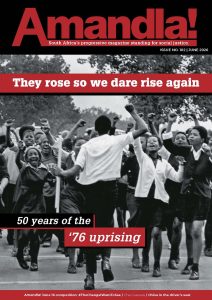
We approach the 50th anniversary of the June 1976 uprising under conditions that should provoke national shame. The youth of 1976 rose up against an oppressive system that denied them education, dignity, and a future. Today, 81% of Grade 4 learners in South Africa cannot read for meaning in any language. Three out of five learners cannot perform basic arithmetic functions such as adding and subtracting.
The roots of this failure lie in decades of austerity and underinvestment. Schools in working-class communities are often dilapidated, lacking basic infrastructure such as proper sanitation, libraries, and laboratories. Teachers are overburdened and under-supported, and are forced to confront the spillover of broader social crises into the classroom: hunger, trauma, drugs, and gangsterism. In such conditions, education cannot function as a ladder out of poverty; it becomes another site where inequality is reproduced.
Don Pinnock’s haunting observation remains painfully relevant:
In the streets of Cape Town’s low-income areas, life is often brutal and short. That’s where hope goes to die, and to see it die in the eyes of a young person is the greatest sadness of all. It should not be like this.
The erosion of hope among young people is one of the most dangerous features of our current situation.
The effect is greatest on children and women:
- Stunting: 29% of children under five suffer from stunting caused by malnutrition. Stunting is not just a health issue; it has lifelong consequences for cognitive development, educational attainment, and livelihoods.
But the crumbling state of our nation has the greatest consequence for women. South Africa remains one of the most dangerous places in the world to be a woman. It is reported that, on average, a woman is raped every 25 seconds. The pandemic of gender-based violence is only one instance of the oppression that women endure in South Africa:
- Unequal pay: Women in South Africa earn 23% to 35% less for the same work.
- Unemployment: Women face higher unemployment rates than men. In the first quarter of 2025, women accounted for 77% of all job losses.
- Informal sector concentration: Women are disproportionately concentrated in low-income, informal, or precarious employment, such as domestic work.
- Poverty rates: female-headed households are generally more impoverished than male-headed households, with a roughly 60% chance of being poor.
- Double burden: women bear the largest share of unpaid domestic work and child-rearing. This is not recognised in national accounts and hampers their economic advancement.
These statistics represent the deep structural violence which is rooted in inequality, patriarchy, and social dislocation. During the liberation struggle, we were clear: a nation will never be free until women are free.
Neoliberalism on steroids
Far from offering a way out of crisis, the policy direction outlined in SONA will, if anything, make it worse. It talks of liberalising key sectors of the economy—energy, logistics, and water. But this represents a deepening of the same neoliberal trajectory that we have been on for the last 30 years and which has brought us to widespread social collapse.
For example, the unbundling of Eskom and the introduction of a competitive electricity market are being presented as necessary reforms. But in reality, their purpose is to open up lucrative opportunities for capital. The planned expansion of transmission infrastructure—some 14,000 km of new lines—will be driven through public-private partnerships (PPPs). This will guarantee returns for private investors while the risks have to be covered by the state.
It’s the same direction for logistics (the partial privatisation of ports and rail), and water (the increasing reliance on PPPs for bulk supply and treatment plants). Basic human needs are turned into commodities to be bought and sold and profited from. Capital reaps the rewards at the expense of the people.
The likely outcome is a modest increase in investment and growth in the short term, but at a significant social cost. Increased tariffs for electricity and water will disproportionately affect working-class households. Job creation will be limited and precarious, often tied to short-term construction projects rather than sustainable employment. Inequality will deepen as profits accrue to a narrow segment of capital.
Structural causes of corruption
The tender system is central to the neoliberal outsourcing model, and it has created fertile ground for rent-seeking and patronage. At the same time, the project of creating a Black capitalist class has unfolded under conditions where access to capital and credit is highly constrained. For many, state procurement and the competition to access tenders become the primary route to accumulation.
This has produced a dual economy: on the one hand, a highly concentrated and financialised core, dominated by established monopoly capital, increasingly financialised and globalised; on the other, a periphery characterised by crony capitalism, where competition revolves around access to state contracts. Political struggles increasingly take the form of intra-capitalist rivalries, rather than contests over alternative economic visions.
In this context, Ramaphosa’s appeal to the private sector to “fix” the country’s crises represents a capitulation to the interests of big capital. The GNU now serves as the political vehicle for this agenda, consolidating a bloc committed to market-led reforms.
Building an alternative force
The urgency of building a new alliance of popular forces cannot be overstated. South Africa needs a revitalised movement that brings together trade unions, community organisations, feminist movements, youth formations, and progressive intellectuals. Such an alliance must not only resist neoliberal reforms but also articulate a coherent alternative—a programme rooted in social justice, democratic control of resources, and economic transformation.
The Freedom Charter once served as such a unifying vision. Today, we need a similar process of collective imagination and mobilisation—one that speaks to the realities of the 21st century while being rooted in the aspirations of the majority.
The state of the nation is dire. The path outlined in SONA leads to deeper inequality, greater commodification, and the entrenchment of elite power. The alternative—a path of transformation, solidarity, and justice—will not be given. It must be fought for.