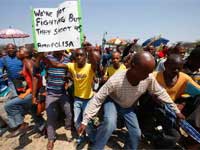
During the month of November last year, the world watched farm workers strikes, particularly those working in vineyards in the Western Cape Province, in South Africa. They were protesting against exploitation and poor working and living conditions on farms, demanding...
south
The Weirdness Closes In
On the face of it, Mamphela Ramphele's long political Calvary has not seemed so strange. It has been clear ever since she returned to South Africa, flushed with neoliberal propaganda and plugging effortlessly into the right-wing smear campaign against President Mbeki,...
After the World Ended (IV): But How Can It Be Done?
What has to be overthrown in the ANC is a party which nearly two-thirds of the electorate voted for, and which is led by some of the shrewdest and most unscrupulous politicians in the country. Somehow those people have to be persuaded to stop supporting it, and those...
Pampering of rich too costly | by Dick Forslund
Speculation is rife in anticipation of next week's budget speech. Will Finance Minister Pravin Gordhan announce tax increases? Might the tax rate for personal income above R617 000 increase to 42 percent? Might it even return to 45 percent for the portion of income...
Amplats’ Restructuring: reflective of broader trends
Anglo's platinum operations are not "unprofitable". Rather, they are not "profitable enough". Plans to restructure will jeopardize the income of 14 000 workers and more than 100 000 dependents. AMCUs call to nationalize in response reflects the growing consensus on...
Marikana mine massacre: why British lawyer has joined fight for justice
James Nichol explains his decision to volunteer to represent forgotten families of dead strikers When South Africa's apartheid police massacred 69 people in Sharpeville in 1960, the revulsion spread as far as northern England. James Nichol, then 15, took part in his...
“The women of Marikana are marching because they want to see justice…” | by Lauren Paremoer
The vivid images of the Marikana Massacre and its aftermath are strikingly different from those capturing previous strikes by South African mineworkers. What is noticeable is the presence of large numbers of women – not all of them mineworkers – acting in support of...
The spectre of equality Platinum: the politics of a simple wage demand | by Amandla! editorial staff
For two months Angloplats refused to negotiate over the minimum demand for R16,500 per month before tax and deductions – a variation of the demand for a living wage of R12,500 in hand that spread like wildfire in the mining industry. The bosses repeatedly sent...
Global health crisis
The world is facing a global health crisis characterised by growing inequities within and among nations and millions of preventable deaths, especially among the poor. These are in large degree due to unfair economic structures which lock people into poverty and poor...