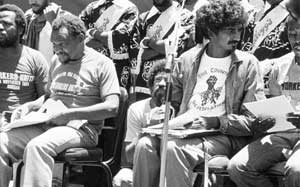
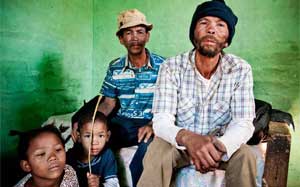
You who have no work, speak. You, who have no homes, speak. You, who have no schools, speak. You, who have to run like chickens from vultures, speak. We must share the problems so that we can solve them together. We must free ourselves. Dora Tamana Should we as women...
power
“The strength of Cosatu still lies in its members”
Interview with Eddie Webster, director of the Chris Hani Institute Edward Webster is Professor Emeritus in the Society, Work and Development Institute (SWOP), at the University of the Witwatersrand. He was recently appointed director of the Chris Hani Institite (CHI)...
Whose strike to whose gain? | by Christian Selz
Alongside the prominent demand for R150 a day, striking farm workers in the Western Cape are demanding an end to labour brokering – an uphill battle that they are likely to lose given that some of their perceived leaders appear to trade in that very business. It is...
Neoliberal land & agricultural policies at heart of farm strikes | by Mazibuko K. Jara
The heroic and historic strike by thousands of farm workers in the Western Cape has struck at the heart of the ANC government's neoliberal policies on land reform and agricultural policy. The strike marks the beginnings of much-needed mass struggles to challenge white...
Embryos of working-class power and grassroots democracy in Marikana
The formation of a workers' committee is an act of power by the working class. It has shaken capital by advancing far beyond trade union bureaucracy. The workers' committee in Lonmin had only been in existence for a week when the Marikana massacre took place on the 16...
After the massacre: The Women’s Solidarity Forum | by Jeanne Hefez
Nomfulela's husband, Apa November, arrives from work around 3pm, covered in sweat under the scorching sun of Marikana and overly dressed in his rock driller outfit. He has spent twelve hours underground chasing a meager bonus with a 75kg machine in hand. Before the...
Tribal courts: land, power and custom | by Mazibuko K. Jara
Throughout the controversial four-year life of the Traditional Courts Bill (TCB), the African National Congress government has firmly allied itself with tribal chiefs (with their new polished image and title of "traditional leaders"), even allowing them a strong hand...
Mali: folly of war in the Sahel | by Professor Issa Ndiaye
The current crisis in Mali is not the result of the March 22 coup d'état, which marked only the collapse of a misguided and corrupt democracy which has been so noisily eulogized. The current disaster has been produced by the monopolization of the State and other...
Euro crisis: the economics of class warfare
Conversation with Özlem Onaran From the start, the neoliberal project in Europe was marked by a striking pro-capital redistribution of income, wealth and power. This seemed to be a good solution to overcome the profitability crisis, but it sowed the seeds of another...