February 14, 2013 Hurrah for the University of Johannesburg Trots! They have launched the first ultra-left political party since the 1994 elections! Isn't this what the Creator has been calling for all along? Well, yes and no. It hasn't been launched or even...
political
Europe: Existential Danger: New Political Challenges
In Europe we are at a new stage of class confrontation. Despite the systemic crisis not only of finance but of the whole of the mode of accumulation and reproduction of 'financial market capitalism,' this system has been able to maintain itself. Its transnational...
Amplats’ Restructuring: reflective of broader trends
Anglo's platinum operations are not "unprofitable". Rather, they are not "profitable enough". Plans to restructure will jeopardize the income of 14 000 workers and more than 100 000 dependents. AMCUs call to nationalize in response reflects the growing consensus on...
Farm strikes: Radical changes needed.
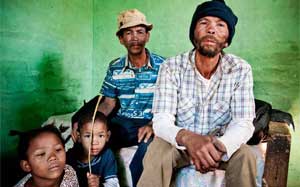
Farm workers began the centennial year of the 1913 Land Act with a continuation of the most militant industrial action in the sector in decades. On January 9th, various Western Cape farming towns were turned into warzones as protestors demanding an increase to a...
“The strength of Cosatu still lies in its members”
Interview with Eddie Webster, director of the Chris Hani Institute Edward Webster is Professor Emeritus in the Society, Work and Development Institute (SWOP), at the University of the Witwatersrand. He was recently appointed director of the Chris Hani Institite (CHI)...
Whose strike to whose gain? | by Christian Selz
Alongside the prominent demand for R150 a day, striking farm workers in the Western Cape are demanding an end to labour brokering – an uphill battle that they are likely to lose given that some of their perceived leaders appear to trade in that very business. It is...
Neoliberal land & agricultural policies at heart of farm strikes | by Mazibuko K. Jara
The heroic and historic strike by thousands of farm workers in the Western Cape has struck at the heart of the ANC government's neoliberal policies on land reform and agricultural policy. The strike marks the beginnings of much-needed mass struggles to challenge white...
“The women of Marikana are marching because they want to see justice…” | by Lauren Paremoer
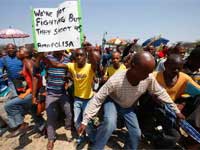
The vivid images of the Marikana Massacre and its aftermath are strikingly different from those capturing previous strikes by South African mineworkers. What is noticeable is the presence of large numbers of women – not all of them mineworkers – acting in support of...
Rebuilding the Zimbabwean state: an idea whose time has come? | by Thomas Deve
Beginning in 2000, Zimbabwe experienced a decade of unprecedented political and economic crisis that was only temporarily alleviated by the inception of a government of national unity in 2010. Despite the occasional populist and radical pronouncements of the head of...