Marx rejected bourgeois morality in favor of an ethics of human emancipation, says Phil Gasper ACCORDING TO the German socialist and philosopher Karl Vörlander writing in the early twentieth century, “The moment anyone started to talk to Marx about morality, he would...
idea
No Zunami on the Streets | by Richard Pithouse
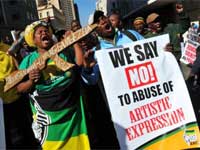
There's no question that the debate, in and around the media, ignited by the ANC's response to Brett Murray's painting has been voluminous and intense in equal measure. And there have been important insights and lessons learned amongst the sound and fury. But the way...
Jamie Claassen was guided by love, humility and humanism | by Brian Ashley
This contribution is drafted with Hamied Mahate that together with Jamie and myself constituted an almost 30 year collaboration. The three of us were a tripod. Now one leg has gone and we are shaky and destabilised. Jamie had three passions his family – Bronwyn,...
“Neoliberalism is in Crisis” | by Slavoj Zizek
Philosopher and Critical theorist Slavoj Zizek, says he’s not an optimist when it comes to Europe and the broad political and ideological struggle in the continent and the world. But he salutes the demonstration of the British workers and the awackening “of some kind...
The Audacity of Occupy Wall Street | by Richard Kim
A few years ago, Joe Therrien, a graduate of the NYC Teaching Fellows program, was working as a full-time drama teacher at a public elementary school in New York City. Frustrated by huge class sizes, sparse resources and a disorganized bureaucracy, he set off to the...
The origin of our species | by Chris Stringe
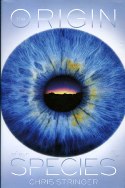
The origin of our species might seem a question of purely scientific interest, but it is actually also an intensely political one. Stringer gives us a dialectical understanding of our evolution, argues Elaine Graham-Leigh. The Origin of our Species (Allen Lane 2011),...
Inventing Africa: History, Archaeology and Ideas (Pluto, 2011) | by Robin Derricourt
This book questions the assumptions and prejudices that appear as soon as Africa is considered. It opens with three geographical ways of defining Africa, then critiques assumptions made by writers and historians, the views of anthropologists and post-colonial...
Neoliberalism, Education and the Politics of Capital: Searching Possibilities of Resistance | by Ravi Kumar
That the instruments of imparting education extend beyond the classical notions of classroom learning is a fact few can disagree with today. It is, however, not enough to realise that the process of educating a human being transcends the limited universe of whatever...
On Post Modernism | by Aijaz Ahmed
The first difficulty in talking about ‘postmodernism’ is that it is a very imprecise word, with shifting meanings in different contexts. Logically, it should be regarded as the ‘post-’ of ‘modernism’—as something that happens after modernism per se. Now, the term...