A slow dawn of realisation is setting in among sensible elites: that the world economy isn’t going to recover according to any prior experience, that financial markets are rigged to transfer from the 99% to the 1%, and that ecological barriers are emerging fast on the...
greater
What We Are For | by Richard Heinberg
Every activist engaged in combating human-caused climate change or specific elements of the current energy economy knows that the work is primarily oppositional. It could hardly be otherwise; for citizens who care about ecological integrity, a sustainable economy, and...
Desktop “Militants” And Public Intellectuals | by James Petras
Invited paper to be read at the “Symposium on Re-Publicness” Sponsored by the Chamber of Electrical Engineers. Ankara Turkey, December 9 – 10, 2011IntroductionThe relation of information technology (IT) and more specifically the internet, to politics is a central...
Corruption and Class Discontent: The Contours of Bourgeois Political Forms and State-Formation | by Maya John
Early this year a relatively unknown 74-year old Gandhian, Kisan Baburao Hazare (also known as Anna Hazare), shot to fame for raising a campaign against corruption. For days on end, Anna Hazare haunted our television sets, and details of his campaign greeted us every...
The too-many-people myth | by Ian Angus and Simon Butler
As the number of humans on the planet reaches 7 billion, Ian Angus and Simon Butler, authors of Too Many People? Population, Immigration, and the Environmental Crisis, look at the persistent idea that overpopulation is the major cause of environmental destruction. The...
Economic crisis and post-capitalism | Interview by Mat Little
Mat Little interviews the economist Harry Shutt about economic crisis and the left alternative. What marks Harry Shutt out as an economist is not that he predicted the financial crisis that struck in 2007 (two years before he warned of ‘an unavoidable financial...
Occupy Wall Streeters are right about skewed economic rewards in the United States | by Josh Bivens and Lawrence Mishel
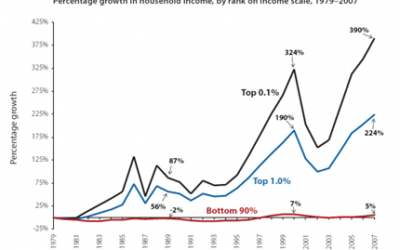
The Occupy Wall Street movement has captured much the nation’s attention with a clear message: A U.S. economy driven by the interests of business and the wealthy has generated increasingly unequal economic outcomes where the top 1 percent did exceptionally well but...
China, Tibet and the left | by Charlie Hore
The riots and protests in Tibet earlier this year were the most significant since China’s takeover in the 1950s. Together with the protests that have accompanied the Olympic torch relay around the world, they have shown that Tibetan nationalism remains a potent force...
Why The Occupied Wall Street Movement Scares The Democratic Party | by Mark Vorpahl
Fueled by a long simmering anger over the economic crisis, the continuing enrichment of a tiny corporate elite who brought this crisis on, and the lack of any political voice for the great majority of people, the Occupy Wall Street Movement has spread to hundreds of...