Hugo Chávez's economic policies were successful but a close vote means the new president cannot become complacent After a short but bitterly fought, insult-laden campaign, Chávista standard-bearer Nicolás Maduro defeated challenger Henrique Capriles, thus assuring...
Economy
Chavez: Lessons for SA
Fidel Castro said of Chavez, "If you want to know what kind of man he was, look who was crying at death and who was celebrating". The torrential hatred directed at Chavez from the metropoles of global power is hardly surprising. Perhaps more than any other, the...
Africa: Future Trajectories for BRICS
Despite much optimism, there are clear indications that BRICS [1] lacks the capacity to function as a powerful and innovative new force in the realm of global politics and governance. Can BRICS emerge as a collective that will reject the current neoliberal order and...
The Revolution Begins Today | by Daniel Chavez
By definition, a revolution is a collective process, not a one-man endeavour. While the social and political legacy of Hugo Chávez is remarkable, the Bolivarian Revolution has been intrinsically tied to him as the leader. With Chávez's death, the Boliviarian...
The 2013/14 Budget: One step forward, two steps backwards
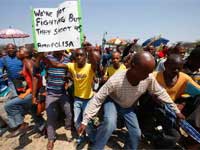
This budget takes one step forward, only to take two steps backwards. It is delivered in a deepening economic and social crisis. In our country, this is highlighted by desperate struggles for basic needs. We have seen this in Marikana and the mineworkers' and...
Pampering of rich too costly | by Dick Forslund
Speculation is rife in anticipation of next week's budget speech. Will Finance Minister Pravin Gordhan announce tax increases? Might the tax rate for personal income above R617 000 increase to 42 percent? Might it even return to 45 percent for the portion of income...
Amplats’ Restructuring: reflective of broader trends
Anglo's platinum operations are not "unprofitable". Rather, they are not "profitable enough". Plans to restructure will jeopardize the income of 14 000 workers and more than 100 000 dependents. AMCUs call to nationalize in response reflects the growing consensus on...
“The women of Marikana are marching because they want to see justice…” | by Lauren Paremoer
The vivid images of the Marikana Massacre and its aftermath are strikingly different from those capturing previous strikes by South African mineworkers. What is noticeable is the presence of large numbers of women – not all of them mineworkers – acting in support of...
Rebuilding the Zimbabwean state: an idea whose time has come? | by Thomas Deve
Beginning in 2000, Zimbabwe experienced a decade of unprecedented political and economic crisis that was only temporarily alleviated by the inception of a government of national unity in 2010. Despite the occasional populist and radical pronouncements of the head of...