

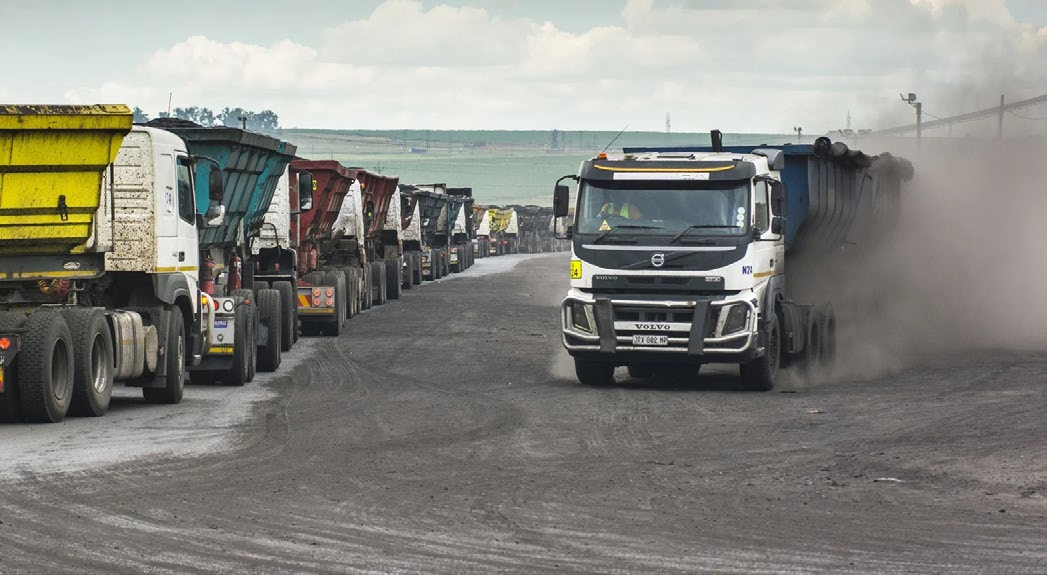
Over 91% of transport emissions are from the road subsector. Over half of road emissions come from private cars. The rest come from freight: light, medium and heavy trucks. The South African emission profile clearly shows the relative absence of reliable public transport and a high level of freight travelling by road.
The threat of climate change is no longer in the distance; it is here. The consequences of ever-increasing average temperatures are extreme weather conditions that create long-term and short-term economic damage, disrupt communities, worsen health and life expectancy, and make workers’ jobs more dangerous. One way to mitigate climate change is to decarbonise the economy.
The transport sector produces about 12% of the country’s total emissions. Decarbonising it can make a significant contribution to reducing South Africa’s carbon footprint. There are two key measures that are key to reducing transport sector emissions:
- Shift at least a million passengers away from private cars and onto public transport, such as buses and rail; and
- Shift a meaningful amount of commercial freight from road transport to rail.
This possible future, however, is rapidly slipping away under the weight of government policies—historical and current.
The reason for this lies in the country’s transportation mix. The South African transport sector can be split into four subsectors: road, rail, air (aviation) and maritime (shipping). Rail and maritime transport emit the least CO2. Over 91% of transport emissions are from the road subsector. Over half of road emissions come from private cars. The rest come from freight: light, medium and heavy trucks. The South African emission profile clearly shows the relative absence of reliable public transport and a high level of freight travelling by road. The relatively low volume of rail emissions clearly indicates that rail is underutilised.
Looking at South African transport-related legislation, the main issue is that current policies (and their financing) are not designed to achieve transport decarbonisation goals, or ensure a safe, reliable and affordable transport system for all South Africans.
The legacy of apartheid
Ever since the 1980s, the predominant approach to solving any transport-related challenges has been to rely on market liberalisation, create artificial competition, and generally operate on the principle that “the market knows best”. As a result, the apartheid government ramped up financial assistance to a diverse range of bus companies, each responsible for their narrow route from a township to a CBD; deregulated the commercial rail sector, cancelling the long-standing regulation that obligated companies to transport freight by rail; vertically separated the railway companies (into infrastructure and train operating companies); and promulgated similarly dysfunctional policies in other transport subsectors.
In 1994, the new democratic government inherited the inhumane, apartheid spatial development system, in addition to a disintegrated public transport sector. In it were numerous bus subcontractors, deregulated taxi services, and a railway with a significant maintenance backlog.
Failures of the last 30 years
The transport policies since democracy, however, have barely improved. The government’s stated goal is to create:
safe, reliable, effective, efficient, environmentally benign and fully integrated transport operations and infrastructure that will best meet the needs of freight and passenger customers, improving levels of service and cost in a fashion that supports government strategies for economic and social development whilst being environmentally and economically sustainable.
But in reality, it followed a similar free-market path.
Instead of creating a coherent and organised public transport system, the government continued to ‘purchase’ routes from independent bus companies. Instead of supporting the railway and investing enough money in the rail infrastructure, the government went further with vertical separation, based on the belief that freight railway should be a profit-making company. Instead of addressing the challenges in the taxi sector, the government relied on the creation of the main mother body—the South African National Taxi Council (SANTACO)—and limited financial incentives to scrap old vehicles. And on it continued.
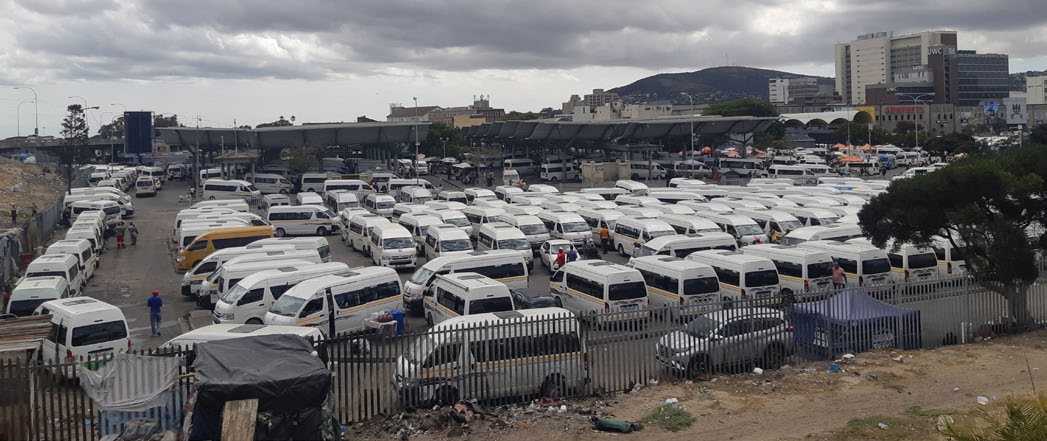
Instead of addressing the challenges in the taxi sector, the government relied on the creation of the main mother body—the South African National Taxi Council (SANTACO)—and limited financial incentives to scrap old vehicles.
Instead of genuinely regulating the transport sector, the government has long relied on trying to solve every problem with financial incentives or through public-private partnerships. The way the public-private partnerships have been organised means that the government was bankrolling the majority of the original investment. In addition to that, the government entered numerous patronage guarantees, where it was willing to subsidise the full extent of private companies’ losses. In a way, what the government was not willing to do for some state-owned enterprises, which were forced to take on a crushing amount of debt, it was happily providing to a range of private companies.
Similar decisions were taken in the area of the transport budget. The government was severely underfinancing the public transport sector: it only increased the budget allocation to the sector by the inflation rate or slightly below. At the same time, it was overspending on public-private partnerships that benefited a narrow segment of the population. For instance, the 2024 budget allocated R6.2 billion for bus rapid transit (a network used in fewer than ten cities). This compares with R7.6 billion towards more than 94 bus contracts, jointly responsible for owning over 6,300 buses, which carry the majority of bus passengers throughout the country.
The result of government policies, which have been largely devoid of new ideas over the last decade, is the deepening of the transport sector crisis that we see today. Over the last decade, approximately 1.5 million more people have started using taxis at the expense of public transportation. The number of private cars is surging, particularly with the widespread adoption of e-hailing services. By the end of 2024, Uber reported having over 40,000 drivers and more than 1.4 million regular customers in South Africa. If this trend continues, decarbonisation targets will not be achieved, which would mean a less secure and more unhealthy future for all of us.
Green capitalism vs just transition
Plans from the business sector propose R2 trillion worth of government interventions to decarbonise the sector. They include tax incentives for electric vehicles, expanded public-private partnerships, government investment in green fuel, and more concessions to third parties in rail. These are accompanied by government purchase of green vehicles for its fleet, and the offer of financial incentives for recapitalising taxis into electric vehicles. The trajectory of these plans is similar to those currently being rolled out – it reflects the green capitalism mindset, which believes that a decarbonised future can be achieved with the help of financial incentives. However, these policies, in some form or another, have been tried for more than fifty years and have essentially led us to the crisis we are currently in.
An alternative to green capitalism is the just transition. That means reforming the transport sector from within, with the goal of protecting workers, communities, and the environment simultaneously. This is not just about reducing emissions; it is about transforming transport into a public good that uplifts all South Africans.
What must be done
South Africa is currently at a crossroads. It can continue the current path and pursue additional tax cuts, public-private partnerships, and other strategies that form the bulk of green capitalism. Or it can choose to move towards a more caring and just society that would benefit all. If it chooses the latter, it needs to:
- Prioritise public transport. That means massive reinvestment in rail and buses, with an end to the piecemeal contracting of private routes and a review of transport provision. The transport sector needs to centre the interests of the final user, and should be responsive to consumers’ needs.
- Reject blind faith in markets. Move away from any initiatives that privatise and guarantee profits for the private sector but socialise the risks.
- Combine financial incentives with regulation. The government must use the full force of its powers, including the authority to correct and regulate the private sector.
- Assess rigorously. Rank projects based on their social and environmental value.
- Be honest about emissions. Electric vehicles are not a silver bullet. Electric vehicles charged from fossil-fuel-derived electricity are merely shifting the origin of emissions from the cars to the power plant. So, decarbonisation must go hand in hand with green energy.
- Balance the environment and jobs. Decarbonisation will lead to job losses in trucking, auto manufacturing, and the fossil fuel sector. The International Labour Organisation estimates that up to a third of workers will need reskilling, while up to 20% may not be absorbed at all. Planning for this cannot be an afterthought.
- Align policies across different departments. There are currently several governmental departments and numerous policies within these departments that have different decarbonisation goals and methods. The government should be united in its approach.
The only way to provide efficient, reliable, safe and affordable, passenger-friendly transport to the masses of South Africans, without incurring huge carbon emissions, is to invest in publicly-funded, collective solutions. Anything else is doomed to failure.
Maxine Bezuidenhout is the head of the Alternatives to Extractivism and Climate Change Programme at the Alternative Information and Development Centre.