




Interview with Vuyo Lufele, NUFAS Deputy General Secretary
Amandla!: You have been on quite a journey since you were Numsa’s Regional Secretary in the Western Cape. Dismissed by Irvin Jim because you asked too many uncomfortable questions about how he was benefiting from the Numsa Investment Company. And some of it, I suppose, is a story of how difficult it is to set up a new union in South Africa. Please tell us the story briefly.
Vuyo Lufele: Since I’ve been out of Numsa, in my mind I had no other thinking than of building an alternative trade union. And it has been a long journey with other comrades across the country.
We started by trying to build a new union called the Metal, Mining and Allied Workers Union of South Africa (Mmawusa). But registration has proven to be a tough journey. I wish I will never go for registration again. Firstly, for you to register, the registrar expects you to have a bank account. But to open a bank account, the bank expects you to have a registration certificate. That’s the first problem. Secondly, for registration, you need to have paid-up membership. But for employers to deduct subscriptions, they expect you to have a registration certificate. That’s another hurdle that you must climb over.
We then decided that we are going to start afresh and look for a strategic union that has a low profile but is registered. And we found the National Union for All Sectors (Nufas) and sat down with the General Secretary. Nufas was formed initially as the National Union for Call Centres of South Africa (Nucsa). In 2023, because of the demand from other sectors, the union opened its scope and changed its name to Nufas. At the time, they had about 2,000 members, and around 1,400 that were paying.
But it was not an easy task. It was difficult to trust us because we are coming from this bad, bad history of our battles in Numsa. Particularly, they were worried that there were ulterior motives. The President thought that I wanted to be the General Secretary. I was clear to the comrades; I came here because we want to build an alternative trade union. We want to build Nufas to be a giant. Amcu came from Num. Today, Amcu is bigger than Num. And I’m here to build a trade union that can be even bigger than Numsa, the biggest union in South Africa.
But I know that the organisation is still small, still at a foundation stage. And therefore, from my side, I want to contribute in the administration of the organisation; that is my area of expertise. I see that the position of the Deputy General Secretary, which is vacant, is appointed by the NEC according to the Constitution. For me, I would appreciate that so that I can share my expertise with the General Secretary. They said, that’s fine.
We came with about three or four companies that were paying, and we said we want no salary from that. Once we generate more income, we can start with a stipend. Once you have got from 1-150 paying members, you must then qualify for R1,000. From 151 to 250, it must be R5,000. And from 251 to 350 it must be R10,000. From 351 to 450 it must be R15,000, and we say that must be our basic salary.
A!: Now what happens if those 150 that I recruited, they now leave?
VL: Your stipend will also leave you. To encourage comrades nationally, because we’ve got 28 officials across the country in W. Cape, E. Cape, North West, Mpumalanga, and Sedibeng. We joined them last year, around May, and within a few months, in February 2026, we have pumped more than 3,000 members into the organisation, pushing it up to just above 5,000 members.
A!: This takes me on to another question. In this country, we have what people call a majoritarian kind of orientation to our labour law. It favours majority unions. It was built like that in the 90s because of the desire to avoid the fragmentation of unions. We were in a period where we wanted to consolidate, so you didn’t want to make it easy for people to set up new unions. But that was in a day when the unions had a progressive leadership. The problem is that now, when the union leaders have become a bureaucracy, it’s very difficult to set up a new union, because majority unions block smaller unions from getting rights in companies. I remember when Cedric Gina, the Numsa President, left Numsa and started the Liberated Metalworkers of South Africa (Limusa); ultimately, he failed. And he had support from Cosatu. What is your experience now?
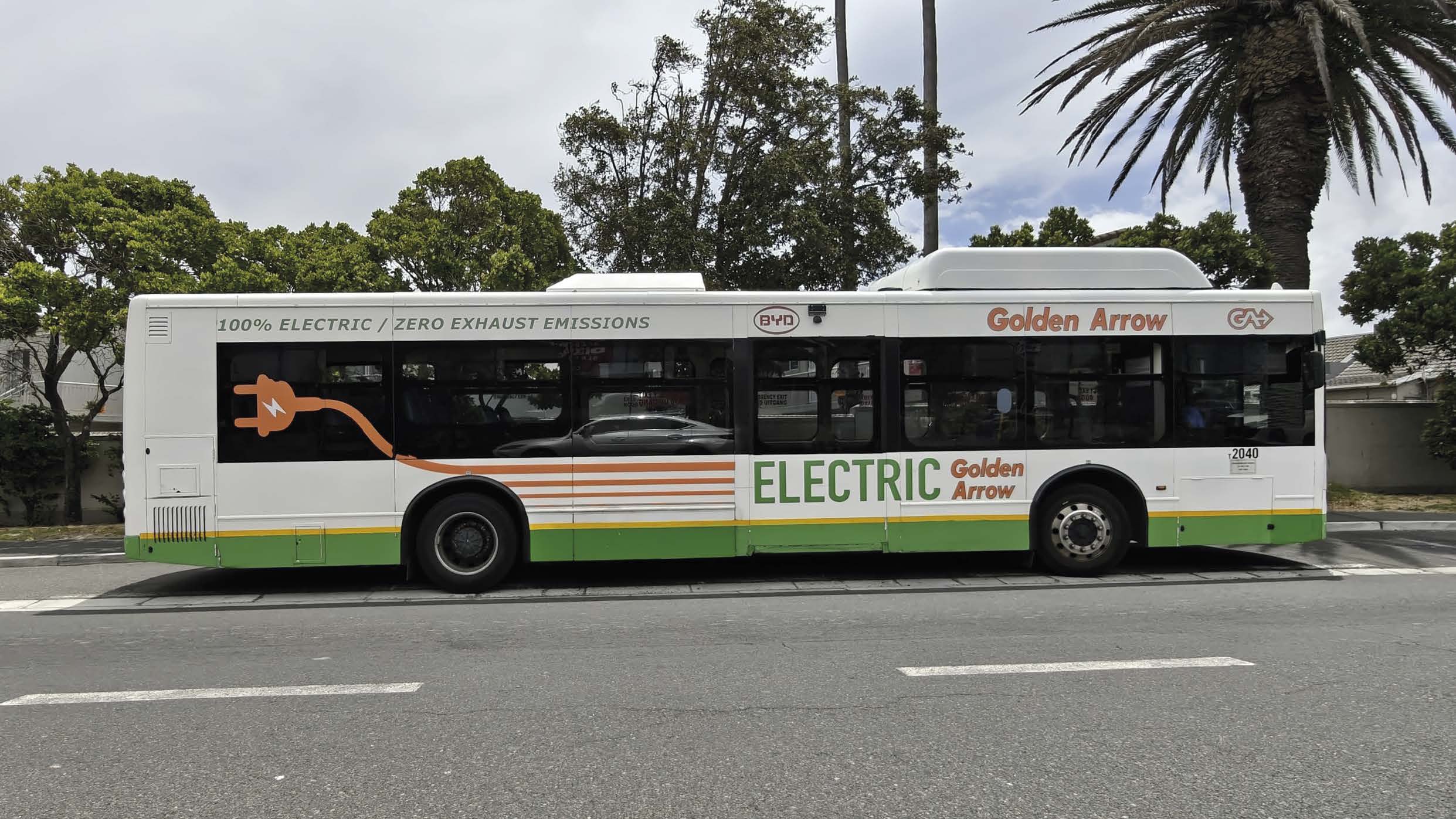
We are organising in Numsa workplaces. For instance, we have close to 800 members at Golden Arrow bus company. And we are pushing to be a majority. (Photo: Husskeyy / Wikimedia Commons, CC BY-SA 4.0).
VL: There is that issue of majoritarianism, but there has been a breakthrough. The South African Correctional Services Workers’ Union (Sacoswu), which organises in the army and in correctional services, was competing with Popcru, the Cosatu affiliate. It was difficult for Sacoswu to find space. And there was a court case up to the Constitutional Court in 2021. The judgment provided for rights to be recognised for minority unions. These include Section 12 rights to have access to the workplace and Section 13 rights to deductions of union subscriptions. With those rights, you can build up your union from the inside.
However, the LRA also allows unions to reach a threshold agreement with employers. If they want to close the door once they are inside, then they will set the threshold. But now the level of organisation inside workplaces has dropped for a union, even if it’s alone. Now you’ll find that it is organising less than even 50% of the total workforce. So it’s difficult for them to say to us we must first get to 50% when they are not even at 50%.
So now we are organising in Numsa workplaces. For instance, we have close to 800 members at Golden Arrow bus company. And we are pushing to be a majority.
A!: Are you also organising companies which were never organised before? And are you organising precarious workers? One of the big criticisms of unions over the years has been that they haven’t organised precarious workers. Is Nufas organising them?
VL: We are doing both, in as much as we are still small. At this moment, we have very few companies that have been unorganised in our books. But they are coming slowly. Most precarious workers that we have now are cleaners. For instance, at Golden Arrow, as we organise the buses, you will find that there is a subcontractor of cleaners.
But most companies are the companies that followed us out of Numsa. For instance, there’s a company called Technical Systems. Numsa had about 95 members. This company employs more than 300 workers. That whole 95 members of Numsa joined, and increased to 185 workers who joined from that company. And when we gave service to that company, they said, “You know what? For 13 years, we were with Numsa. For a few days you have been here and the change that you have brought. We can’t believe”.
A!: There is another minefield for any union. It’s one of the things has brought Numsa down. The question of service providers. Contracts with service providers offer opportunities for corruption. They enrich a bureaucracy in the union at the expense of the membership. How are you managing to deal with that and keep that out of your union?
VL: We are still wrestling with that conversation. It was that experience with service providers that led to our dismissal from Numsa. We are avoiding it at all costs. It’s not an easy thing, because we have no resources, and we know what they offer. And this funeral demand from workers can make us go crazy. We interviewed some service providers. Then we thought maybe we can do this thing internally: put certain funds away, rather than getting into the space of service providers. Firstly, it’s costly for the organisation. Secondly, how safe are we? Because service providers are clever; they will first identify who’s got power here, so that we can then visit that person alone.
I’ve been confronted by many service providers, but I declared to the comrades. While I was still suspended from Numsa, a service provider offered to keep paying my salary. I said, No, no, no, no, I’m on a paid suspension. All what we needed is assistance to establish this project. I can’t work in that fashion. It’s a difficult thing. And when you are alone, you see that’s why many comrades fall into this trap.
It’s something that we have not dismissed it, but we have to sit down and make sure that we try to close loopholes that may lead to us being corrupted.
A!: Of course the position you’re taking makes you vulnerable, because somebody else is going to come up in the union at some point and say, I’ll give you a funeral policy; this leadership has been refusing to give you a funeral policy.
VL: No, definitely. And that person is going to be a champ, because workers want that funeral policy.
A!: I suppose I should have asked this question before. Given all this grief that you are suffering, given all these challenges that you are facing, what has driven you to do such a thing to yourself? What motivates you? What makes you want to do this very hard thing of building a new union in circumstances which are also extremely difficult?
VL: This may not be a simple answer, but I’ve gone through the experience of how workers are left so vulnerable, and how leaders have used the employed masses to enrich themselves. In Numsa, we have noticed that leadership only focused on building factions that will be close to them in order to enrich themselves. Comrades would be shouting socialism, only to find out at the end that workers have been used for individuals’ enrichment.
And these people have become a majority in the trade union movement, leaders of that nature. And everybody who comes to the union will see this as a fashion — that in order to get something, you must be aligned to individuals that are corrupt in the organisation.
I must say that Numsa is gone. What these guys did: they dealt with all those who were anti-corruption and who were vocal, but who also had expertise in servicing. They are left with those who have got no capacity to service.
A!: What are the key differences between Nufas and a union that has failed, such as Numsa?
VL: At the centre, you must know that you are brought together by workers and their interest. Now the interest of workers is service, because at the point of production, when they are abused by employers, the first thing they think is a trade union. Once they get into a trade union, they must get what they deserve, which is service. We must be a fighting union that represents workers and their interests. It’s not going to be easy. I have felt it myself, because we are of various capacities, but we must build that capacity.
Firstly, what has left the trade unions today is training of shop stewards. Today, everything is dependent on a union official. A worker can’t move without a union official. And we must get rid of that. There must be training of shop stewards to a level of even going to conciliations and arbitrations. If we can bring that spirit, then officials will deal more with recruitment, general meetings and so on. So the organisation will be alive at a workplace, rather than only at the CCMA and bargaining councils.
Secondly, we must allow robust internal democratic debates in the organisation. We can’t be suspicious of each other immediately. Thirdly, union leaders must comply with the union constitution, and worker control must become the key. Workers must not be undermined. They must be allowed to develop ideas of how they feel, or they think.
A!: You said something in the beginning about this being the way to regenerate the trade union movement in South Africa from the state that it’s in. And I think everybody sees that it is in a weak state, in terms of numbers, in terms of militancy, and in terms of organisation. So what is going to happen to the current big unions? Do you see a future where more militant unions like yours are going to grow up and eat their members, or are people going to work inside those unions to change them? How do you see that change taking place?
VL: That’s a difficult one, and I know that it won’t be an overnight change. We are not looking at joining any federation for now. If we join a federation, we will be forced to focus on a particular scope and merge with another union. Because there will be principles that are guiding a federation. But we want to build a big, strong union that is open, as this union is, to other sectors. If we can champion what we are championing and attract more workers, they may come from other unions and join us, and we will make sure that we keep this culture of building. It’s about bringing change.
*Featured Image by Harvey Barrison / Wikimedia Commons, CC

.jpg)