
Over the past two decades, Ghana has made progress in expanding access to improved water sources. National surveys show that nearly 92% of households now use an improved source of drinking water, such as a piped supply, with urban areas nearing 98% coverage. In fact, Ghana achieved one of the fastest increases in safely managed water coverage in sub-Saharan Africa between 2000 and 2020. Nonetheless, experts remain concerned that our water bodies are under serious threat from pollution, illegal mining, poor waste disposal and climate change. In fact, Ghana may face a clean water shortage by 2030 if current trends continue. These trends are defined by quality crises, inequitable access, and system frailties that demand urgent reform.
As of 2020, only 41% of the population had water accessible on their premises, and just 55% had water free from contaminants. This means millions still trek to distant sources or rely on vendors, and much of the ‘improved’ water is potentially unsafe. A 2021 census report highlighted that over 1.4 million urban households lack water on their premises, with nearly 90,000 urban families enduring round-trip walks of more than half an hour to fetch water. In rural areas, the deficits are higher. More than two million rural Ghanaians still do not have safe drinking water as of 2022. The last-mile communities remain beyond the reach of Ghana’s progress. Access to safe water must be treated not just as an infrastructure issue but as a pressing public health concern, requiring targeted efforts to include these overlooked populations.
Polluted waters: the toll of galamsey and waste
Ghana’s water crisis is as much about the quality of its sources as it is about infrastructure. Across the country, rivers and streams have been turned turbid brown, poisoned by mercury and other chemicals from illegal mining, known locally as galamsey. By one estimate, in 2023, 60% of Ghana’s freshwater sources are now contaminated by toxic runoff from illicit gold mining operations. The Water Resources Commission has warned that many waterways are in “critical condition,” especially in Ghana’s gold belts, where galamsey is rampant. In mining communities, rivers that once sustained farms and provided drinking water have become unusable sludge. Likewise, urbanisation and poor waste management compound the pollution. The pollution comes at a high price. Ghana Water Company Limited (GWCL) – the utility serving cities – often must shut down treatment plants when intake water quality plummets, or spend significantly more on chemicals to treat polluted raw water.
Small towns and rural communities, many of which rely on rivers and shallow wells, are left with dangerously unsafe water or no supply at all during pollution spikes. In central Ghana, for example, the Tano and Birim rivers have periodically been declared off-limits for domestic use due to mining-related contamination. Reversing this trend will require enforcing environmental laws: clamping down on illegal mining and industrial dumping, while investing in water resource protection. Each day that galamsey continues unabated, Ghana edges closer to an irreversible water pollution disaster that undermines the health and livelihoods of millions.
Governance gaps and service shortfalls
The fragmentation and friction within Ghana’s water institutions have compounded the crisis. Responsibility for water service is split primarily between GWCL, which manages urban piped systems, and the Community Water and Sanitation Agency (CWSA), which oversees rural water supply. In theory, this urban–rural division makes sense – but in practice, it has created grey areas and disputes over who serves fast-growing small towns and peri-urban areas. When GWCL was spun off as an urban utility in the late 1990s, its mandate covered settlements above a certain population threshold (often quoted as 5,000 residents). Meanwhile, CWSA was tasked with facilitating water access for rural communities and small towns, typically through boreholes and community-managed piped schemes. Today, Ghana’s landscape has changed: many “small towns” have burgeoned into large townships, and peri-urban slums have swelled within city borders, and these areas often fall through the cracks of both agencies’ remits.
A jurisdictional tug-of-war has emerged, hampering effective service delivery. In recent reforms, CWSA began transitioning from an advisory body into more of a utility operator, taking direct control of hundreds of small-town water systems. Yet there are currently no legal provisions regulating CWSA’s activities as a utility, and mechanisms to resolve disputes between local District Assemblies and CWSA remain unclear. This regulatory void has led to confusion over who is accountable when systems fail. The Public Utilities Regulatory Commission (PURC) formally regulates GWCL’s tariffs and performance in cities, but no equivalent oversight exists for rural water services. As a result, small-town networks and self-supply arrangements operate without strong quality control or consumer protection. But both agencies face criticism. GWCL struggles with non-revenue water—lost through leaks, illegal connections, and poor billing, amounting to nearly 50% of the total supply.
CWSA, while more community-oriented, operates in a regulatory grey zone, with inconsistent funding and oversight. The result is a fractured system, particularly in peri-urban areas where service delivery falls through the cracks. Professionals in the sector have long called for reform: clearer jurisdictions, competitive frameworks, and decentralised models that invite private and social enterprises to participate responsibly. Without alignment, inefficiency will continue to sabotage Ghana’s water future.
Environmental and climate pressures on water resources
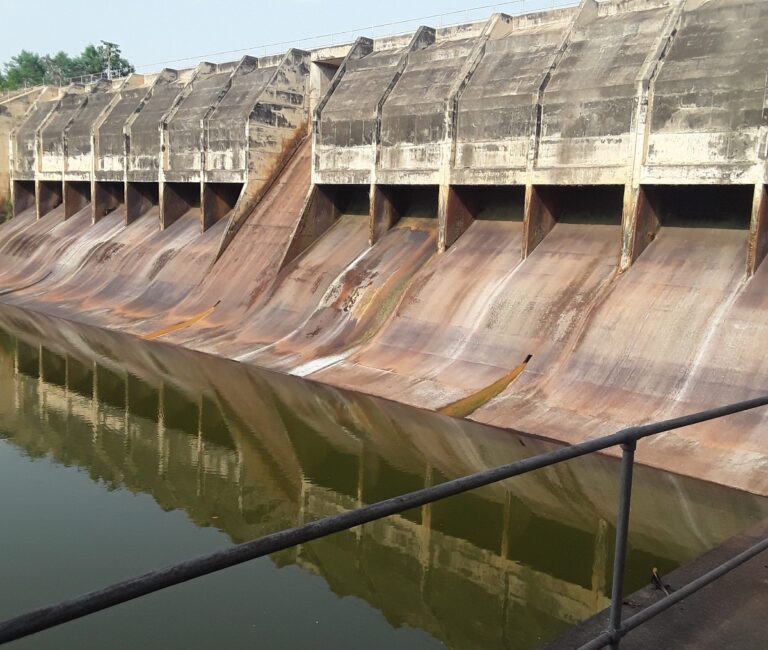
Rampant encroachment and illegal farming in the Barekese watershed have destroyed approximately 80% of the forest cover that protects the reservoir.
Overlaying the human-driven problems is the intensifying stress of environmental degradation and climate change. Ghana’s forests – natural sponges that regulate water flows – have been rapidly vanishing. The country has lost over 33% of its forest cover since the 1990s, due to logging, mining, and agricultural expansion. This deforestation directly hits water supplies. Take the Barekese Dam, which provides about 80% of the water for Kumasi: rampant encroachment and illegal farming in the Barekese watershed have destroyed roughly 80% of the forest cover that protects the reservoir. Without that buffer, rainfall rushes in heavy torrents, carrying silt and agrochemicals into the dam. GWCL officials report a 53% increase in turbidity at Barekese and major drops in water levels, resulting in frequent water shortages for an estimated 80% of Kumasi’s residents. Similar stories unfold across the country, from the Atewa range to the northern savannah.
Meanwhile, climate change has made rainfall more erratic and seasons less predictable. Climate impacts mean that Ghana must plan for greater variability: building resilient systems that can store water in wet times and endure longer dry spells. It also means protecting and restoring ecosystems, such as forests and wetlands, that naturally safeguard water availability. Unfortunately, current trends are headed in the opposite direction, with watershed degradation worsening communities’ vulnerability. Unless these environmental pressures are addressed, technical fixes in the water sector will prove woefully insufficient.
Inequities from urban slums to rural hinterlands
Nowhere is Ghana’s water emergency more apparent than in the stark inequalities that persist in access and affordability. Where you live and what you earn often determine your water fate. While GWCL’s urban tariffs are regulated by the Public Utilities Regulatory Commission (PURC) and set between GHS 4.5 and GHS 6.6 per cubic meter (R7.74 to R11.35), informal vendors operating in unregulated zones charge far more. In Madina or Ashaiman, water may cost up to GHS 10 per cubic meter. In some rural areas, the price can surge to GHS 12, twice the regulated cost. This hits the poorest hardest. Families living in informal settlements or remote areas, where utility pipelines don’t reach, end up paying exorbitantly for water of dubious quality. Some are forced to choose between water and other essentials. Others, unable to afford even that, resort to untreated sources, exposing themselves to diseases such as cholera, typhoid, and hepatitis. Ironically, the more affluent households connected to GWCL often pay less per litre than the poor, who must buy from tanker drivers or kiosks.
These inequities underscore that water insecurity in Ghana is not merely a technical problem, but fundamentally a social justice problem. Any solution must prioritise the marginalised: the rural village where women walk miles for a bucket, the urban slum where children fall ill from contaminated sachet water, and the small town where high prices force families to ration usage.
Pathways to progress: building a more equitable and resilient water future
Confronting Ghana’s multifaceted water crisis requires bold, coordinated action – and it requires it now. Experts and advocates are coalescing around a reform agenda to chart a path out of emergency toward lasting water security. Below is a focused set of actions to guide the way forward:
- Protect Water Sources: Aggressively tackle illegal mining and industrial pollution through better enforcement, empowered institutions, and the use of tools like drones and river patrols.
- Rehabilitate and Safeguard Watersheds: Restore degraded catchments by reforesting buffer zones and empowering local water basin boards to monitor and protect key ecosystems.
- Overhaul Water Infrastructure and Reduce System Losses: Expand and modernise water networks in underserved areas, while repairing leaking infrastructure and improving metering and maintenance.
- Clarify Governance and Institutional Mandates: Define the roles of GWCL, CWSA, and local authorities based on current realities, and foster joint task forces for seamless service delivery.
- Expand Regulatory Oversight and Equity in Pricing: Extend PURC regulation to all providers, standardise water pricing and quality, and prevent exploitation during shortages through emergency by-laws.
- Design Pro-Poor Water Access Policies: Implement subsidised connections, lifeline tariffs, and accessible water points to ensure affordability for low-income and vulnerable populations.
- Professionalise Rural Water Management: Train and formalise local operators, introduce performance standards, and engage partners to strengthen technical and financial capacity.
- Secure Financing for Inclusive Water Services: Increase national and donor investment in climate-resilient infrastructure and pro-poor subsidies to unlock the socio-economic benefits of clean water.
- Strengthen Transparency and Public Accountability: Establish a Water Sector Task Force, support citizen monitoring, and shift from fragmented pilots to coordinated, long-term planning.
Ghana’s water crisis is complex but not intractable. The building blocks for change are within reach: a motivated civil society, a responsive regulatory body, and a growing body of policy research. What remains is the political will to act. If Ghana is to safeguard the health, dignity, and prosperity of its people, it must treat water security as a national priority not just an infrastructure issue, but a matter of environmental stewardship, social justice, and economic development. Water is life, as the saying goes, and in Ghana’s case, water may well be the key to a future of inclusive growth and stability.
Ebenezer John Atsugah is the Executive Director of Blue Impact, Ghana and Aaron John is the Executive Director of CCAIE