
The Western liberal political empire is shamed beyond repair by genocide in Palestine. The neoliberal project is stained beyond any cleansing by inequality reduction, food security or ‘climate action,’ as are proposed for the Johannesburg G20 summit in November. So what’s next?
With global capitalism stressed by Trump’s unilateral import tariffs, expectations have recently risen for a revived ‘multipolarism’. This is partly because the Brazil-Russia-India-China-South Africa (BRICS) bloc continues to grow in terms of population, GDP and geopolitical gravity. In 2023, it added new members, Egypt, Ethiopia, Iran, and the United Arab Emirates, at the Johannesburg Summit. In addition, Saudi Arabia is often also included as an imminent member, and Indonesia joined earlier this year. There are also ten new 2025 ‘partners’ which have observer status: Belarus, Bolivia, Cuba, Kazakhstan, Malaysia, Nigeria, Thailand, Uganda, Uzbekistan and Vietnam.
The bloc’s July 2025 summit was hosted in Rio de Janeiro by centre-leftist Brazilian President (and Workers Party leader) Inácio Lula da Silva. In spite of the widely anticipated failure to address the range of issues that a serious multipolarista would insist upon in Rio, subsequent weeks have shaken geopolitical certainties and given the BRICS a new aura.
Russian dictator Vladimir Putin and Trump met in Alaska on August 15. No change in the Ukraine war resulted, except Moscow’s more intensive bombing of civilians, leaving the US leader “very disappointed.” But because of fallout from the imposition of new US tariffs in early August—especially against Brazil and India (as Putin’s second main oil customer)—anger swelled and Deutsche Welle correctly asked, “Will BRICS boom under Trump’s watch?”
The Shanghai Cooperation Organisation, which usually focuses on security, met in Tianjin on August 31 and September 1. Putin played a high-profile role there, and Indian and Chinese leaders Narendra Modi and Xi Jinping, who often clash, showed at least a temporary willingness to work together. They will host the 2026 and 2027 BRICS summits, respectively.
And on September 8, in an emergency online meeting called by Lula to discuss trade, the BRICS leaders were put to an even more serious test: could they overcome their self-defeating practice of separate, one-on-one talks with Washington, and now finally act together against chaotic US tariff policies?
Lula called Trump’s politicking ‘unacceptable blackmail.’ Still, a multipolar revolt against US trade bullying is far off. As several Brasilia sources told Bloomberg on September 1, the BRICS online summit a week later would fall short of systematic resistance: “Lula does not want the meeting to turn into an anti-US summit,” even though Trump levied a 50% tariff on Brazilian exports for his government’s prosecution of predecessor Jair Bolsonaro, due to a failed January 2023 coup attempt.
Indeed, the September 8 meeting contained obvious rhetoric critical of tariffs, but not one of the BRICS leaders had the guts to name Trump or the US directly. No concrete action was suggested by the bloc, just whingeing. Meanwhile, South Africa’s trade minister continues to seek a disadvantageous trade deal with Trump.
Multipolar myths, for and against
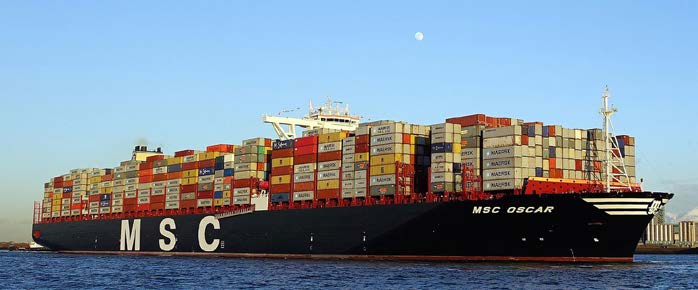
The global trading system is today experiencing its worst disruptions since the Second World War… WTO economists have downgraded expectations for merchandise trade volume growth by nearly three percentage points and now expect a 0.2 per cent contraction in 2025.
Nevertheless, some on the international Left believe that BRICS could build fairer global power relations, based on mutual respect and a level playing field.
To make this case plausible, the multipolar movement would need clear victories against the dominance of Western imperial interests, including the neoliberal World Trade Organisation (WTO), International Monetary Fund (IMF) and World Bank. These interests are based on the expansion agenda of corporations – especially financiers, merchants, Big Data capitalists, Big Pharma and the extractive industries – which have long dominated most Western multilateral institutions’ policies.
Yet in the current context, alleged reform at the Bretton Woods Institutions has now gone into reverse. WTO leader Ngozi Okonjo-Iweala admits that, partly due to her institution’s disempowerment by Trump (dating to 2019):
The global trading system is today experiencing its worst disruptions since the Second World War. Multilateral cooperation itself is being called into question… WTO economists have downgraded expectations for merchandise trade volume growth by nearly three percentage points and now expect a 0.2 per cent contraction in 2025.
The BRICS bloc’s efforts to reform global financial institutions—by securing more voting power and influence at the IMF—have failed, even though they poured vast sums into the Fund. Meanwhile, the extremely conservative, corruption-riddled New Development Bank is still lending 75% of its money in US dollars even for basic-needs development projects that don’t need imports.
In contrast, critics from the independent Left are traditionally far more doubtful about multipolarity. One reason is their implicit analytical grounding within a broader theory of ‘subimperialism’ (explained below), which locates BRICS economies not against but within world capitalism.
The critics instead ally with progressive local opponents of BRICS regimes, especially against their ruling classes and big corporations. The result may be an ‘anti-polar’ version of internationalism, in explicit opposition to both imperialist unipolarity and subimperialist multipolarity.
Still, the BRICS’ prominence is amplified by Trump’s ill-informed hatred of it, and his oft-repeated irrational fear of its ‘de-dollarisation’ potential (no matter how often that agenda is denied, even by the main dollar-sanctions victim, Putin).
Lefts in conflict
Trump’s rise leaves many in the global Left expectant that their societies will agree that ‘another world is possible’ against Western imperialism. But scholars and activists are split between three main currents: the multipolar Left, the social democratic Left and the independent Left.
First, the multipolar Left: it is especially prolific on chatty YouTube geopolitics channels but more ably represented by the Tricontinental Institute for Social Research. It often deploys hard-hitting, anti-imperialist rhetoric and analysis in the spirit of prior generations of Third Worldism, such as the 1970s New International Economic Order and the 1955 Non-Aligned Movement.
In South Africa, the argument that the BRICS are the vanguard of a contemporary anti-imperialism has been advanced by the African National Congress Radical Economic Transformation faction, the MK Party, the Economic Freedom Fighters, the SA Communist Party, the Congress of SA Trade Unions and the National Union of Metalworkers of SA.
For Tricontinental, the central problem is US ‘hyperimperialism’ and not the BRICS, because “Objectively, there is no such thing as subimperialism…”—even if its leader Vijay Prashad in 2013 had termed the BRICS ideology “neo-liberalism with southern characteristics” and correctly warned against BRICS’ “readjustment of power relations, not a transformation of them.”
Second, the social democratic left: In contrast, the globally-oriented social democratic Left is personified by politicians such as Jeremy Corbyn in the United Kingdom, Jean-Luc Mélenchon in France, Bernie Sanders and Alexandria Ocasio-Cortez in the US, and perhaps Uganda-born Zohran Mamdani, if he becomes New York mayor in November. Social democracy is represented by several (fragile) Pink Tide governments in Latin America (especially Colombia), a few leftist African and Asian governments (e.g. Burkina Faso and Sri Lanka), and some civil society proponents (e.g. former Greek Finance Minister Yanis Varoufakis and his Progressive International allies).
And third, the independent Left: many share doubts about multipolarism based on evidence to date, and instead typically support the BRICS regimes’ internal, critical, leftwing opponents. Such solidaristic forces advocate racial, social, environmental and economic justice, and so are typically repressed in the majority of the ten BRICS states, 11 if we include Saudi Arabia. Aided by a beleaguered left-wing intelligentsia, they are anti-polar insofar as their social-movement internationalism advocates the globalisation of people and de-globalisation of capital.
Highlights this century are the successful 2000-01 campaign to make AIDS medicines global public goods by removing IP restrictions; the Global Justice movement of the early 2000s and the World Social Forum; and, in recent years, the Black Lives Matter, Palestine solidarity and climate justice movements. And perhaps also a renewed surge of ‘No Kings!’ uprisings against Trump in the US (June 14 and October 18).
Locating BRICS elite interests
Against Trump, the BRICS have so far been divided-and-conquered, and in South Africa’s case, so obsequiously in a humiliating Oval Office meeting on May 21, that a round of golf with that notorious cheater remains high on President Cyril Ramaphosa’s agenda. Grovelling, he unsuccessfully offered Trump a formal state visit in late November to attract him to the Johannesburg G20 summit. For 2026, Trump is scheduled to host the G20 at his own Miami golf course.
Critical voices about individual BRICS ruling classes, as well as the bloc as a whole, are based on a wide range of grievances. These are expressed in periodic ‘People’s BRICS’ or ‘BRICS-from-below’ counter-summits, or the 2018 and 2023 ‘Break the BRICS’ protests in Johannesburg, and coming up, the 2025 ‘We the 99%’ People’s Summit.
As for a more general concern about BRICS capitalism, consider China’s massive excess capacity creation—i.e. what Karl Marx considered the core contradiction of capitalism, namely ‘overaccumulation,’ and its destructive displacement. And the roles of BRICS corporates in extractive and productive circuits of capital are often the most neo-colonial and exploitative.
Economically, the subimperial powers generally share the following domestic characteristics:
- high levels of corporate concentration and financialisation;
- a more rapid tendency to the over-accumulation of capital and then dumping of surpluses;
- increasing dependency on commodity production and processing for export (‘reprimarisation’); and, driven by neoliberal public policy,
- super-exploitation of labour and widespread ecological destruction.
This often co-exists with an ossified class structure, high levels of social repression and rising inequality—yet sometimes also provides space for a talk-left, walk-right nationalism so familiar to southern Africans.
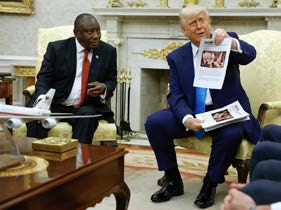
Against Trump, the BRICS have so far been divided-and-conquered, and in South Africa’s case, so obsequiously in a humiliating Oval Office meeting on May 21, that a round of golf with that notorious cheater remains high on President Cyril Ramaphosa’s agenda.
At the global or regional level, subimperial economies are central to contemporary global value chains. They do much of the extraction and processing of raw materials supplied by poorer countries, and also, since the 2000s, in China, most manufacturing of inexpensive goods. In contrast, the imperialist power centre continues to benefit from most surplus extraction from both BRICS and poorer economies, via royalties for intellectual property and profits taken in the financial, marketing and distributional circuits of capital.
In this process, subimperial states typically exacerbate what is termed ‘unequal ecological exchange’ with poorer countries, especially in Africa: uncompensated extraction of non-renewable natural resources and associated ecological destruction.
Subimperial states also tend to suffer crises of overaccumulation in more intense forms, and therefore often seek to export surplus capital via Foreign Direct Investment, loans and trade. The ‘dumping’ (below-cost sales) of products is common in order to undermine regional competitors. Many BRICS countries impose very severe tariffs on each other, as a result; e.g. the South African International Trade Administration Commission imposing new tariffs on imports of Chinese steel, nuts and bolts, tyres and washing machines this year.
And politically, subimperial states generally cooperate with imperialist multilateralism. They seek to become increasingly incorporated into, and influential within, the essentially unreformed Washington-New York-Geneva multilateral institutions and G20. To illustrate, subimperial powers’ ruling classes “collaborate actively with imperialist expansion, assuming in this expansion the position of a key nation”.
All the BRICS countries—aside from Iran—in 2024 increased their trade (especially energy and military) with the most brutal subimperial power, Israel. And this was during a genocide that, ironically, was called out by the South African government at the International Court of Justice in late 2023. Despite this,
- Chinese and Indian corporations facilitate military imports to Israel through their management of (privatised) Haifa container terminals, including thousands of Chinese drones that hunt down Gazans;
- South Africa, Russia, and China provide the bulk of coal supporting the Israeli grid (now that Colombia has imposed sanctions), with the genocidaires’ oil supplies coming from Brazil (9 percent) and new BRICS partners Kazakhstan (22 percent) and Nigeria (9 percent);
- Brazilian, Indian, and South African firms maintain relations with Tel Aviv’s main arms corporation, Elbit, while the UAE, Saudi Arabia, and Egypt facilitate Israel’s military defence against Iran and Palestinians;
- Thousands of citizens of Russia, Ethiopia, India and South Africa serve in the Israel Defence Forces, unhindered by BRICS home-state mercenary regulation.
Since 2022, four BRICS countries—Indonesia, India, Brazil and now South Africa—have enthusiastically hosted the overarching club of powerful countries which manage imperialism, the G20. Rather than challenging the imperialist status quo, BRICS countries typically defer to the G20, highlighting their own ‘key nation’ responsibilities.
Typical of this collaboration was, for example, the BRICS Kazan Declaration of October 2024: “We reaffirm our commitment to maintaining a strong and effective Global Financial Safety Net with a quota-based and adequately resourced IMF at its centre.” The BRICS Rio Leaders Declaration in July was conscious of how imperialism’s ‘key nation’ subimperial allies function within the G20:
“We underscore the key role of the G20 as the premier global forum for international economic cooperation that provides a platform for dialogue of both developed and emerging economies on an equal and mutually beneficial footing for jointly seeking shared solutions to global challenges and fostering a multipolar world.”
Trump’s inheritance of 2026 G20 hosting (at his private Miami golf club), and his pledge to end consideration of global climate, public health, international trade, peace and anti-inequality rhetoric inherited from Lula and Ramaphosa, should have led the latter to arrange a 2025 ‘vote him off the island’ exclusion (the way the G8 tossed out Putin in 2014 after Russia invaded Crimea).
Multipolar rhetoric favours ‘solidarity, equality and sustainability’—Ramaphosa’s G20 buzzwords. But the assimilation of the BRICS into Western-dominated political economy and global malgovernance will continue to exhibit all the features of subimperial alignment, rather than anti-imperial challenge. And that will be to the detriment of everyone aside from G7 and BRICS elites, and will continue to reinforce the need for anti-polar political resistance.
Patrick Bond is based at the University of Johannesburg Centre for Social Change.