
Climate change, wars, genocides, and economic turbulence: the world in which we presently live is worrying, and the future looks quite bleak. This sorry state is in large part the result of decisions made in the last decade of the past century, following the collapse of the Soviet Union.
During those years, Washington opted for the perpetuation of its global dominance at the cost of world peace. This was to be achieved by stoking past tensions with Russia and China. Washington treated these two countries as potential enemies, although neither of them represented any longer a systemic challenge to global capitalism, which they had both integrated into. This fundamental policy led to what I have described since then as the New Cold War.
Unbridled neoliberalism
The economic corollary of this policy was unbridled neoliberalism. This included the toughening of the neoliberal diktats of international financial institutions, the culmination of the imperialism of free trade with the foundation of the World Trade Organisation, and the ‘shock therapy’ fostered by Washington and its allies in post-Soviet Russia. This went along with a benign neglect of the dangers of climate change. US imperial hubris reached its peak with the presidency of George W. Bush and the wars that his administration launched in Afghanistan and Iraq.
Unbridled neoliberalism produced the most important crisis of global capitalism since the Great Depression of the interwar years of the twentieth century. The Great Recession of the late 2000s led to massive state intervention, using public funds to bail out the banking system. Unlike what many believed then, this crisis did not usher in the end of neoliberalism; on the contrary, it led to a renewed neoliberal onslaught. The same is true of the next gigantic economic crisis, the 2020 Great Lockdown of the Covid-19 pandemic. Major changes in applied economics do not arise from neutral, intellectual debate. They reflect, primarily, changes in the balance of social forces.
This balance has remained largely in favour of global capitalism until now, at the expense of global labour. It was worsened by the two successive economic crises, along with the rise of unemployment and the expansion of working poverty. Both of these further weakened working-class resistance and unionisation. France recently illustrated this. Pensions reform has been a key objective pursued by French capitalism for several decades. It was defeated in 1995 by the most important surge in class struggle that France has seen since 1968. The reform was finally enforced in 2023, in spite of stubborn resistance by the French labour movement.
Radicalisation of Left and right
The social consequences of the economic crisis of the late 2000s fed a political radicalisation in two opposite directions.
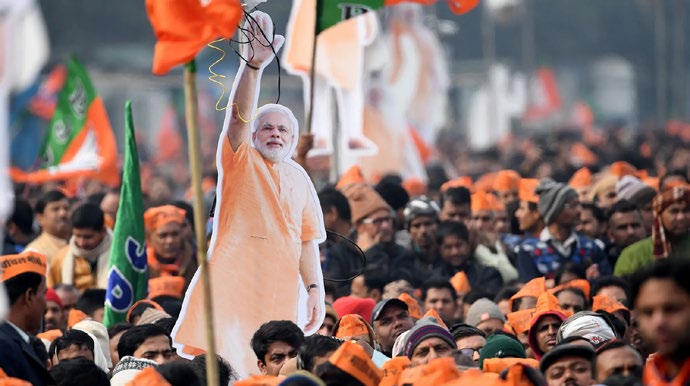
The progressive wave was counterbalanced by a reactionary radicalisation, rising since the onset of the neoliberal onslaught. The far right surged globally with the onset of neofascistic governments in several countries, such as India under Narendra Modi.
On the one hand, a rise of progressive resistance struggles in the following decade, spectacularly inaugurated by the Arab Spring in 2011. It was followed by mobilisations in countries such as Spain, Greece and even the US itself. A second global wave of revolts in 2019 included a Second Arab Spring and a struggle upsurge from East Asia to Latin America, before it was eventually choked off by Covid-19. This progressive radicalisation took a political form in the rise of mass-based anti-neoliberal currents in various countries, such as Syriza in Greece and Podemos in Spain. The successes of Jeremy Corbyn in Britain and Bernie Sanders in the US were more unexpected. And there was Jean-Luc Mélenchon in France, and a new wave of progressive governmental changes in Latin America—in Bolivia, Chile, Colombia, Mexico and Brazil.
On the other hand, this progressive wave was counterbalanced by a reactionary radicalisation, rising since the onset of the neoliberal onslaught. While the political ‘centre’ has kept shifting rightward ever since, the far right surged globally with the onset of neofascistic governments in several countries. These included major powers such as India under Narendra Modi, Russia under Vladimir Putin, Brazil under Jair Bolsonaro, and the US itself under Donald Trump. The reversal included the increasingly authoritarian course on which China set under Xi Jinping.
Failure of the Left
The overall global balance has clearly tilted in favour of the reactionary radicalisation. This is not a product of objective conditions alone, but also of the Left’s own shortcomings and failures. It has reproduced many of the problems that marred the twentieth century’s Left, including electoralism and self-limitation when in government or when it comes within reach. They also include bureaucratism, ‘strongman’ politics, and ‘neo-campism’—knee-jerk support for, or lack of critique of, whoever is antagonised by Washington and its Western allies—“the enemy of my enemy is my friend”.
Fundamentally, the Left has not managed to reinvent itself. There have been a few exceptions: Black Lives Matter in the US, for example, and the Resistance Committees in Sudan.
Success of the right
Most of the far right, on the other hand, has reinvented itself as neofascism: it learned the lessons of the failure of twentieth-century fascism and adapted to what was acceptable to the present-day capitalist order and big business. So, it has ardently espoused neoliberalism and proclaimed its adherence to procedural democracy. But it has gradually emptied it of content once in power, with authoritarian curtailment of political freedoms and suppression of basic conditions of political competition.
This reinvented far right has been rising globally at the expense of both the neoliberal mainstream and the Left, building up on the social resentment created by neoliberalism and channelling it, above all, into scapegoating migrants.
Russia’s invasion of Ukraine in February 2022, launched by a Putin regime that has been ever more drifting to the far right, provided a major boost to the Western imperialist alliance under US hegemony. It renewed the original rationale for this alliance—‘democracies’ against authoritarianism—with customary hypocrisy and double standards. It also allowed a major expansion of NATO to Finland and Sweden, and it triggered a massive increase in military expenditure globally, to the great benefit of arms producers.
Biden basically continued his predecessor’s foreign policy in two major respects:
1. He continued Trump’s provocative stance on China. The difference was that he tried to disguise the predatory economic drive of US imperialism against the rise of China’s economic power by pretending, again, to uphold ‘democracy’ against China’s autocratic drift under Xi.
2. He carried forward Trump’s blatantly pro-Israel stance. So he focused on expanding the ‘normalisation’ of relations between Gulf oil monarchies and Israel. And he did not reverse any of Trump’s pro-Israel moves, nor try to hold back the Israeli far right from further expanding its settler-colonial encroachment on the Palestinian West Bank.
Dual role of the genocide
This policy laid the ground for the Biden administration’s uninhibited endorsement of the genocidal war waged by Israel in Gaza since 7 October 2023. The Biden administration and most of its Western allies have de facto greenlighted the ongoing crimes against humanity perpetrated by the Israeli armed forces.
This first open condonation by Western governments of an openly genocidal war waged by a far-right government since the Second World War has hugely discredited Western liberalism and exposed its racist worldview. It has allowed for the normalisation of the European far right, not least through a joint condemnation of a purported ‘new antisemitism’. This has become a thin veil for the shared Islamophobia that unites traditional antisemites and neocolonial white supremacists.
The Western governments’ reaction to the Israeli onslaught on Gaza has given a major impetus to the global rightward drift.
At the same time, there is growing worldwide indignation towards the genocidal massacre of Palestinians, including growing protests within the United States itself. This is a further indication of the persistence of a significant potential, especially among the youth, in support of progressive causes. These include opposition to imperialist and colonial wars, to racism in all its forms, to gender oppression, to the continuous neoliberal dismantlement of all social gains achieved in the previous century, to capitalism itself, and to the ever more criminal neglect of governments in the face of climate change and its dreadful consequences.
Reinvent the Left
This potential needs to be captured and channelled into organised forms that could tremendously enhance its effectiveness and confer a new credibility and hopefulness on the fight to change the world. That requires a reinvention of socialist anticapitalism, fully absorbing the lessons of the defeats of the twentieth century’s Left and finally settling the unsettled accounts of its huge historical bankruptcy.
In sum, in order to be able to convince at large that “another world is possible”—the central slogan of the global justice movement since the turn of the century—it is imperative to first show in deeds, and not only in words, that another Left is possible. It is therefore extremely urgent for the Left to reinvent itself.
Gilbert Achcar is Professor of Development Studies and International Relations at SOAS, University of London.