The task of defining both the Left and political Islam is no mean one. Both function and are understood within their own conceptual frameworks, geographical locations and time frames. In the limited space available here one can only speak in broad terms – thereby...
secular
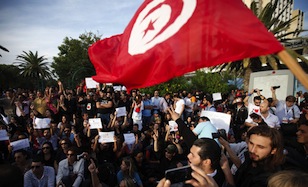
Tunis, the Birthplace of the Arab Spring, 2 Years On| by Boris Kagarlitsky
I first visited Tunis four years ago. I liked its French-Arab feel, the streets that still carried such French names as Lafayette, Jaures and Pasteur, and the tram connecting the city center to the residential area that the locals proudly referred to as a "metro."...
Which road for Damascus | by Phyllis Bennis
The short Syrian Spring of 2011 has long since morphed into something close to full-scale civil war. If the conflict escalates further, it will have ramifications far beyond the country itself. As the former UN secretary-general and current UN and Arab League envoy...
The Muslim Brothers in Egypt’s ‘orderly transition’ | by Gilbert Achcar
Egypt’s uprising, contrary to most predictions, was initiated and driven by coalitions – including political parties, associations and internet networks – which were dominated by secular and democratic forces. Islamic organisations or their individual members took...
Democracy Triumphs in Tunisia’s First Free Elections | by Stuart Schaar
Despite attempts to demonise Tunisia’s Al-Nahda, the Islamist party emerged as the most important in the elections held last month. Tunisia, where the Arab spring began, has shown what the ballot box can achieve.The atmosphere was celebratory, almost like being at a...
The Flowering of the Arab Spring: Understanding Tunisia’s election results | by Esam Al-Amin
Now that Tunisia's elections have passed - with just minor incidents - and the Islamist Ennahda party won the largest share of votes, the country waits for the constituent assembly to be formed, and to see what changes will be effected in Tunisian politics. It will...