I recently met Edward* behind the counter of a coffee shop in Cape Town. As he prepared my coffee, he told me about the very different life he had since arriving in South Africa from Zimbabwe. His first job was cutting sugar cane for R150 a day. He lost that job because local protesters demanded that his employer hire South Africans instead of foreigners. He then worked as a bar assistant for less than minimum wage before finding another job at a Cape Town coffee shop where he trained as a barista.
Soon, however, his employer stopped paying him altogether. Without proper documentation, Edward was afraid to approach the Department of Labour to demand his pay. Unable to pay his rent, he was forced to live in a shack with his wife, newborn child, and teenage son. Today, his papers are in order, and he found a decent job that pays enough to sustain his family.
Many foreigners are not as fortunate as Edward. Without proper documentation, they remain vulnerable and highly exploitable as workers. Protests and violence increase their vulnerability. However, making foreign workers more vulnerable does not make South African workers more secure. Instead, it reinforces structural inequality that is responsible for widespread poverty and extreme income inequality.
Twenty years ago, I described this in my book, Labour Movement: How Migration Regulates Labour Markets. Although it was based on research in North America and Europe, it explains today’s situation of foreigners in South Africa very well.
The book acknowledges that migrants come to richer countries in search of job opportunities. However, migrants are essential for the economies of the host countries. Their vulnerabilities and lack of protection render them highly exploitable, providing a docile and desperate low-wage workforce.
Labour markets are split
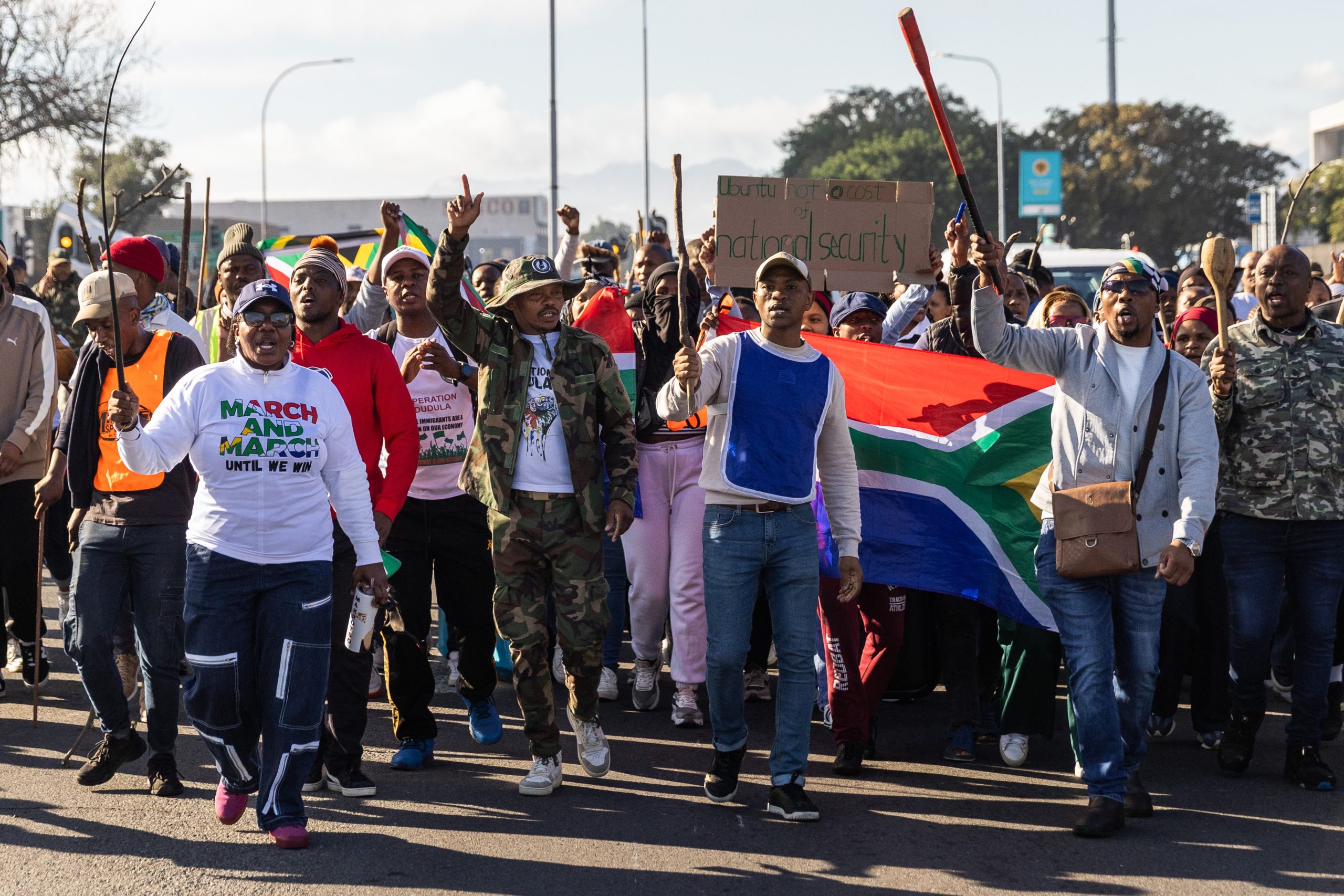
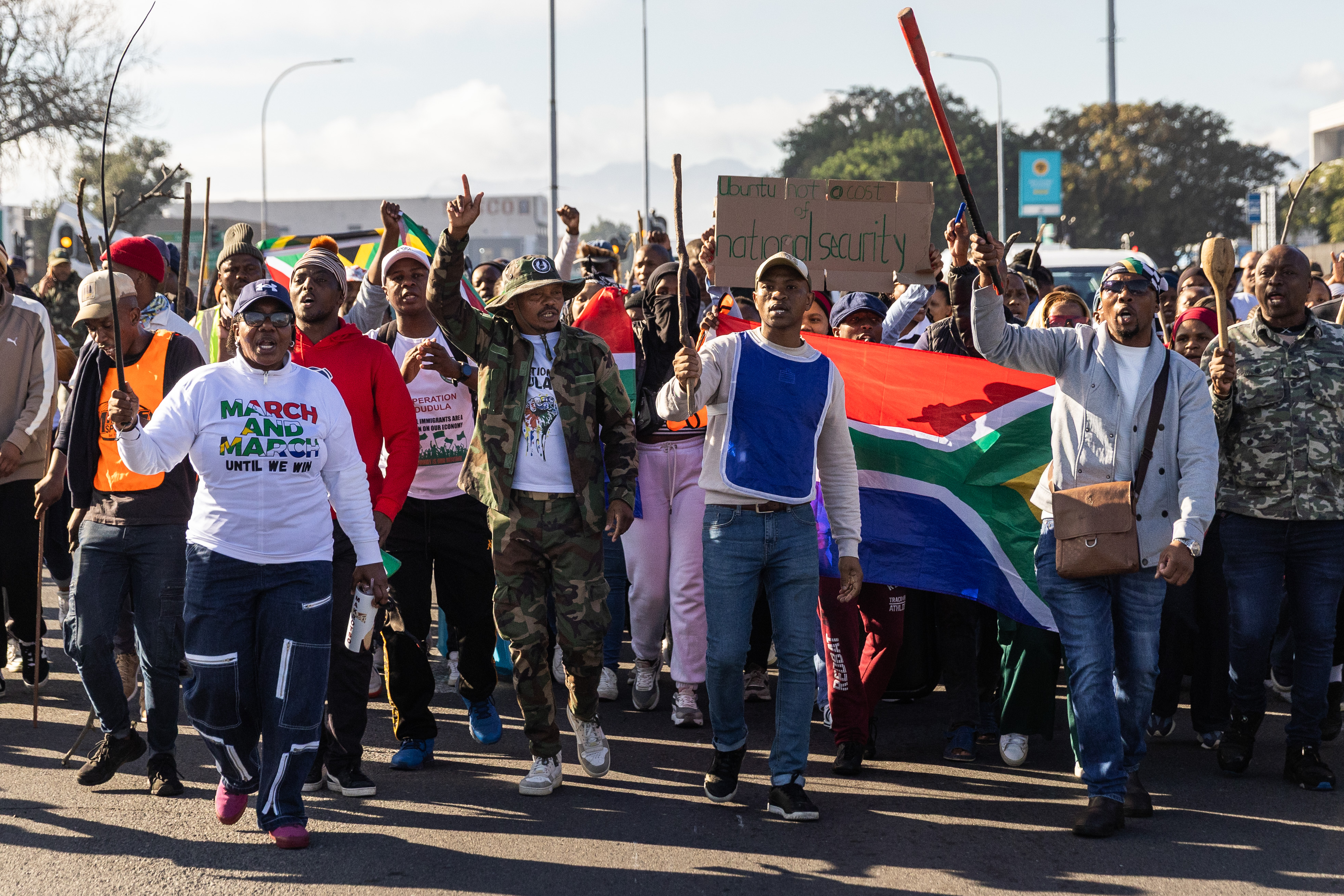
Seen in this light, we can reinterpret the March and March protests. The people marching are doing the dirty work for the people on top of the economic hierarchy, which renders the third segment even more vulnerable and exploitable. (Photo: Ashraf Hendricks/GroundUp)
There is a primary segment of full-time, well-paying jobs that offer benefits and security. Then a secondary segment contains jobs that are part-time, temporary, low-paying, and insecure. This segment absorbs the cyclical economic shocks and performs the low-end service functions that enable the primary segment to remain high-paying and stable and businesses to be profitable, even during a period of prolonged crisis – like in South Africa, with low economic growth and high inequality.
A super-exploitable class of foreign workers adds a segment to the bottom of this split labour market. They don’t steal jobs from the secondary market. Rather, they add an entirely new segment of workers who are forced to endure abuse and wage theft, and who can be hired and fired at will. Although they do not directly compete with South African workers, their very existence diminishes the secondary segment’s bargaining power and forces them into concessions towards lower wages, less job stability, and so on.
This competition between the lower segments of course benefits the privileged primary segment. Correspondingly, income inequality in South Africa has been among the highest in the world.
An alternative solution
Seen in this light, we can reinterpret the March and March protests. The people marching are doing the dirty work for the people on top of the economic hierarchy, which renders the third segment even more vulnerable and exploitable.
Would removing all foreigners without proper papers solve the problem? No, their existence has become a structural necessity of the South African economy. The departure of an estimated 178,000 African migrants has already affected some sectors, such as the textile industry, domestic work, and delivery services.
However, the majority of undocumented foreigners have remained. Many migrants will endure enormous hardship to stay, because the alternative of returning may be extreme poverty, persecution, and war. Often, the lack of proper paperwork is manufactured by the government itself through administrative delays and bureaucratic inefficiencies.
The reality is that migrants cannot be protested away.
The solution is to extend rights to foreigners, protect them from illegality, and include them in the legal labour market, where they pay taxes or open businesses that provide services and create opportunities for all South Africans. Edward is an example of how removing the root cause of his super-exploitability enabled him to obtain decent employment and sustain a family. He is no longer part of an underclass of undocumented workers that drags South Africans into a race to the bottom.
*We have changed his name to protect his identity.
Harald Bauder is a professor at the Toronto Metropolitan University in Canada and an extraordinary professor at the University of the Western Cape.
This is an edited version of an article first published in Mail & Guardian.
*Featured Image by Ashraf Hendricks/GroundUp