




Four months of demonstrations and blocking main roads in the south of Mozambique and an eight-year-old, ongoing civil war in the north are marks of an intensifying class struggle. Protests were triggered by a totally fraudulent election in October 2024, when young people realised the ruling party, Frelimo, would never allow their voice to be heard at the ballot box. Demands for a recount quickly expanded into protests about poverty and that young people had no jobs, future, or influence.
Unarmed young people realised that they had power by blocking roads, particularly the road from South Africa to Maputo port and the main N1 north-south road. This disrupted the economy and particularly the incomes of the Frelimo elite. Police responded with tear gas and live ammunition, shooting dead more than 350 protesters, but the protests only increased, including the burning of Frelimo local offices, houses and property of Frelimo elites, and police stations. The newly ‘elected’ Frelimo President Daniel Chapo stopped the police murders, hoping to calm the protests, but it did not. So, on 21 February, Chapo reverted to the hard line, calling demonstrators “terrorists” and saying “blood will flow”, if necessary, to regain control.
Frelimo may have lost the support of Mozambicans, but it has so far retained the support of donors and international agencies. However, the economic squeeze means it is no longer meeting IMF conditions. Foreign governments support Mozambique because of its minerals, especially the third-largest gas field in Africa. But the protests are delaying mining, and the development of the gas has been halted for four years. When will the international community lose patience with Frelimo?
A long battle
After Frelimo’s decade-long liberation war, Mozambique gained independence 50 years ago. Frelimo has remained in power ever since. The first years saw economic recovery and expanded health and education. Ronald Reagan, elected in 1980, launched or intensified a series of ‘proxy wars’ in which the US fought the USSR in other countries, including in Mozambique. The proxy war ended only with the end of the Cold War. One million Mozambicans died in that war. Apartheid South Africa was the US agent, fighting and directing it.
With the end of the proxy war, the IMF imposed ‘shock therapy’ on Mozambique—the mix of austerity and the free market imposed on the countries of the former Soviet Union. The idea was rapidly to turn the communists into capitalists, which could only be done by concentrating on the party nomenklatura, whose power in the party gave them economic power. The only condition was that they had to take their profits by serving the interests of foreign banks and companies. It was a rentier and comprador capitalism. The only rules were ‘greed is good’ and what was considered ‘corrupt’ in the bad old socialist days was now OK. In Russia, those powerful party people came to be called oligarchs, and the term can be used in Mozambique as well.
Austerity for the bulk of the population was also part of the package. Nurses and teachers had their wages cut to below the poverty line, so they had to demand money from patients and parents in order to feed their families. Frelimo took power over education, the courts, and other key services—people were promoted if they obeyed Frelimo, but in exchange, could take bribes and spend part of their time doing private work. To facilitate key projects, donors organised conferences and report writing and paid these officials in dollars, not a bribe, of course, but only for those who did what the donors demanded.
Initially, the most important way for the private sector to earn money was by supplying the state, often for donor-funded projects. The prices were inflated, but money went to the party and to key party people negotiating the tender. An honest education minister was pushed out when he tried to stop the lucrative corruption in textbook buying. And donors and the IMF turned a blind eye. Most extreme, Mozambique became a major transit centre for heroin, and a huge illegal hardwood timber trade grew, both coordinated by members of Frelimo’s ruling Political Commission. Many reports were published, but donors turned a blind eye.
The resource curse
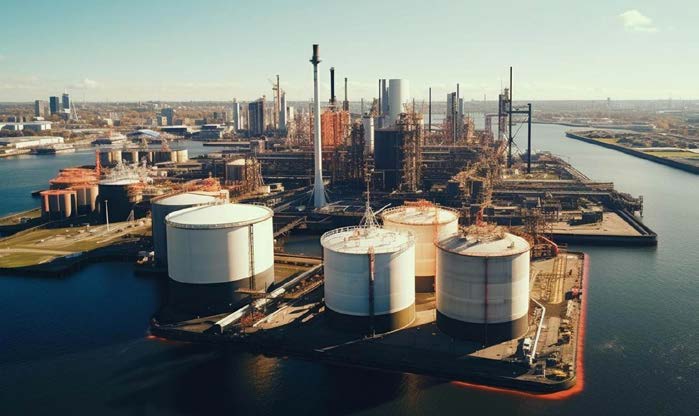
Cabo Delgado was found to have one of the largest natural gas fields in Africa. The new oligarchs took their share, multinational corporations took most of the profits, and there was nothing left for local people.
Mozambique had never been considered a natural resource country, but after the end of the proxy war, prospectors discovered gold, rubies and other gemstones, coal, titanium sands, and graphite. This was particularly in Cabo Delgado, which was found to have one of the largest natural gas fields in Africa. The new oligarchs took their share, multinational corporations took most of the profits, and there was nothing left for local people. Another member of the Frelimo Political Commission saw that artisanal miners had found rubies. He claimed the land and violently pushed off hundreds of miners and farming families. He had no interest or experience in mining, so he sold 75% to a British company, Gemfields, which mined and sold the rubies. But his share made him wealthy. This is the ‘resource curse’.
Gas development began, and service contracts went to Frelimo people, many with no links to Cabo Delgado. Not only were there no jobs for local people, but many were also pushed off their land and lost their livelihoods. In 2017, angry young men began an insurgency, which expanded through half of the province, and they gained support. In 2020 and 2021, they captured two district towns. The gas projects stopped and have not yet been resumed. President Filipe Nyusi flew to Rwanda and negotiated a mercenary force of 2,000 well-trained Rwandan soldiers, who pushed back but failed to defeat the insurgency.
In October 2021, four of the key donors—World Bank, EU, ADB and UNDP—presented a proposal for stopping the war through development. It said, “at the root of this insurgency are perceptions of inequality, exclusion and marginalisation [and] perceptions of injustice in the distribution of benefits and opportunities arising from extractive activities.” President Nyusi refused to allow the proposal even to be presented to the Council of Ministers.
In June 2022, the World Bank admitted that the insurgents were right. Mozambique is “one of the fastest growing economies in sub-Saharan Africa (SSA)” and at the same time “is now amongst the most unequal countries in SSA”. “Mozambique’s impressive growth rates have disproportionately benefited those at the top of the income distribution in urban areas.”
Elections and the hidden hand
Frelimo knew it had a problem, that it could not win the next elections, but too many of the key decision makers were oligarchs who would not change. For the 2023 municipal elections, Venancio Mondlane ran for mayor in Maputo, and his use of social media and understanding of youth concerns attracted a large following. I was working on a Public Integrity Centre (CIP) daily election newsletter. Parties are given official copies of each polling station’s results sheets, which Mondlane brought to CIP, which showed he won with 55% of the vote. The Frelimo-dominated National Elections Commission (CNE) and Constitutional Council (CC) subserviently said Frelimo won.
Both sides organised for the October 2024 national election. Frelimo illegally took control of the entire electoral process. Mondlane stood, did well, and clearly had the support of the youth. As expected, the CNE and CC said Frelimo’s Daniel Chapo won. Mondlane demanded a recount. There was huge fraud, and EU observers saw election staff openly changing the result. No one knew who really won, and the CC admitted it was impossible to do a recount.
Two of Mondlane’s close assistants were gunned down by the police, and the first demonstration and press conference were tear-gassed. Mondlane fled the country but made daily Facebook broadcasts. The demonstrations exploded, initially about Mondlane’s call for “electoral truth”. But the demonstrations were increasingly locally organised and soon changed into youth demands—exactly the same ones cited in the 2021 World Bank, EU, ADB and UNDP report.
President Nyusi would not accept any suggestion of local roots to the Cabo Delgado war and always blamed a “foreign hand”, which he could not name, for supporting the “terrorists”. The new President Chapo said in February 2025 that both Cabo Delgado insurgents and the election demonstrators are “terrorists” promoted by a “foreign hand”.
Of course, there are “foreign hands”—donors and foreign agencies such as the IMF are still supporting the oligarch state in Mozambique, because of the resources. But Frelimo is holding out, because its oligarchs and their foreign partners know that ending the uprising needs jobs and training, which would require that the oligarchs and resources companies give more of their rents and profits to local communities.
And as this is being written in March 2025, it is not clear who will blink first.
Joseph Hanlon is a long-time writer on Mozambique and is a visiting fellow both at the London School of Economics and the Open University.

